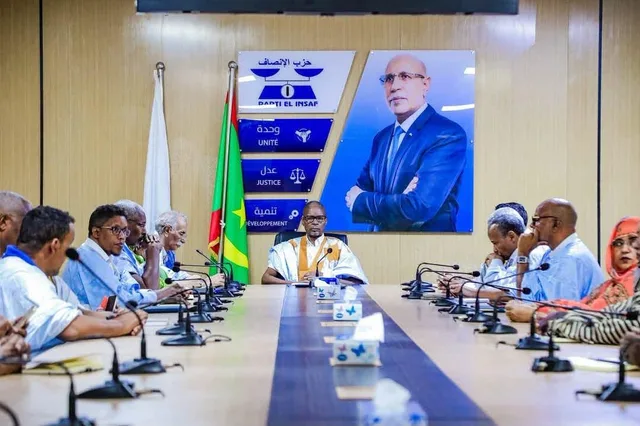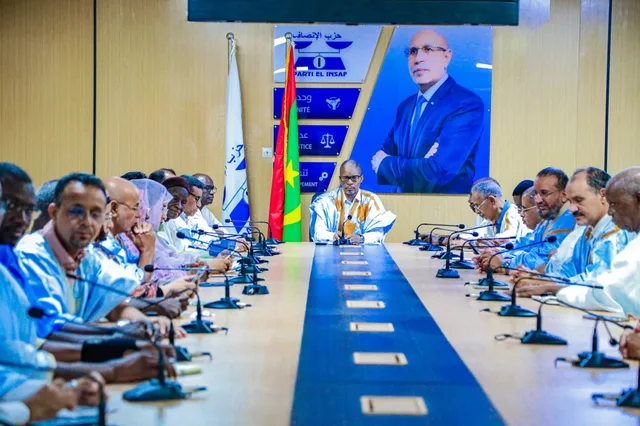
Madar (Nouakchott) - The national dialogue's sessions have not yet begun, but forming its supervision committee has opened, within 48 hours, the first public rift inside the presidential majority: one party has frozen its coalition membership, another rejects the committee's line-up, and a party leader says he learned the representatives' names from a WhatsApp message.
What happened?
On Friday, October 16, 2026, the majority coalition announced its representatives on the dialogue supervision committee, naming El Insaf leader Mohamed Ould Bilal as the committee's vice-chair along with seven other members. The coalition said it based its choice on the parties' electoral weight, using their number of members of the National Assembly as the basis and municipal councillors as a tie-breaker, to ensure "clear grounds for representation and equal opportunities".
The parties had agreed on September 3 on a 20-member supervision committee: 7 for the majority, 7 for the opposition and 6 for civil society, as set out in Madar's report on a quarter-century of dialogues.
FCJ freezes its membership
The same day, the Front for Citizenship and Justice (FCJ, "Jemaa") froze its membership of the coalition in protest at what it called El Insaf's unilateral decision. In a statement, it said the appointment of eight representatives, including Mohamed Ould Bilal, Mohamed Yahya Ould Horma and Vala Mint Mini, was not based on consultation or consensus and does not reflect the majority's various components.
In an interview with Sahara 24, party leader Mohamed Jemil Ould Mansour described the dispute in detail: two majority meetings without agreement on the names, attempts to reach the El Insaf leader that went unanswered, then a WhatsApp message announcing the list on Friday morning. He said the parliamentary-representation criterion was never raised in the meetings and that it penalises parties founded after the elections.
Unity and Development: "the majority is no one's preserve"
On Saturday, October 17, the Unity and Development party rejected the formation of the committee without consultation or fair criteria, saying the majority is "a space for partnership, not the preserve of a single party" and that the sole parliamentary criterion ignores licensed parties within it despite their support for President Mohamed Ould Cheikh El Ghazouani during his two terms. It called for the committee to be reviewed on clear, participatory criteria.
What does it mean for the dialogue?
The two parties' objections converge on two points: the selection criterion and the lack of consultation within the majority. The coalition maintains that the electoral criterion ensures clarity. By Saturday evening Madar had seen no public response from El Insaf or dialogue coordinator Moussa Fall to the calls for a review.
The dispute comes as no date has yet been set for the dialogue to open, 19 months after Moussa Fall was appointed to coordinate it, and while MP Biram Dah Abeid, the AJD/MR party and the "Forces of Salvation" coalition boycott it. President Ghazouani said in Atar on September 20 that the dialogue "does not aim to undermine the foundations of the state".