Madar (Nouakchott) - The Atlantic migration route to the Canary Islands has accelerated sharply since the start of November 2026, with more than 3,200 migrants reaching the Spanish archipelago in the first five days of the month, while interceptions and rescues continue off the Mauritanian and Senegalese coasts and security and maritime coordination between Nouakchott and Madrid intensifies.
What is happening on the route
According to a provisional emergency-services count reported on the evening of Thursday, November 5, by the Spanish news agency EFE, more than 3,200 migrants on 39 boats reached the Canaries between November 1 and 5, including 2,300 people on 26 boats on the island of El Hierro alone, among them 307 minors. The same source said most of the boats now reaching El Hierro set off from Senegal, while most of the 435 people who reached Lanzarote left from the coast between Agadir and Tan-Tan in southern Morocco.
The pace has not slowed since: 743 migrants arrived on Thursday, November 5 on seven boats, and at dawn on Friday, November 6, Spain's maritime rescue service escorted three boats carrying more than 340 people to the port of La Restinga on El Hierro, according to the Europa Press agency.
The crossing remains perilous: at least seven people died on a boat carrying nearly 140 people that was rescued at dawn on Monday, November 2, about 150 kilometres from Lanzarote, according to the newspaper Canarias7, citing maritime rescue sources.
What the official figures show
The Spanish Interior Ministry's fortnightly report, released on Tuesday, November 3, shows that 13,327 people reached the Canaries irregularly between January 1 and October 31, 2026, on 160 boats, compared with 14,099 people on 231 boats in the same period of 2025, a fall of 5.5%, according to Spanish media citing the report.
The same report, however, shows that the archipelago received 4,357 people in the second half of October alone. The elDiario.es website had reported that 6,164 people were rescued in October, or 46% of all arrivals since the start of the year. The ministry's report to October 15 had recorded 8,970 arrivals in the Canaries since the start of the year, against 13,491 in the same period of 2025.
The figures led the president of the Canary Islands government, Fernando Clavijo, to ask Spanish Prime Minister Pedro Sánchez for an urgent coordination meeting, saying the current numbers were "reminiscent of 2024", when 47,000 people reached the archipelago's shores. The Spanish government's delegate in the Canaries, Anselmo Pestana, acknowledged that the rise in arrivals was "straining" some of El Hierro's resources, while saying the system was working normally thanks to transfers to other islands.
Where the boats leave from
Available data indicate that a large share of current departures are from the coasts of Senegal and Gambia. On November 3, the Senegalese Navy patrol boat Walo rescued 221 would-be migrants, including 22 minors and 12 women, who said they had left the town of Barra in Gambia for the Spanish coast: 170 Senegalese, 48 Gambians, two Malians and one Ivorian, according to the Senegalese website Leral.
Off the Mauritanian coast
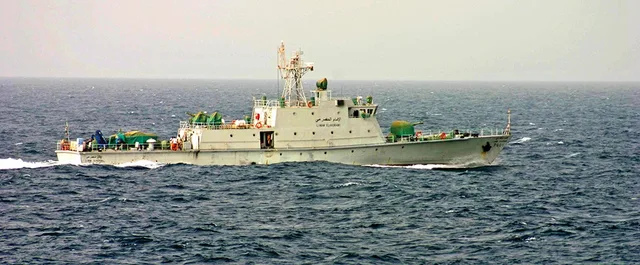
In Mauritanian waters, the National Navy rescued 166 migrants of various nationalities, including women and children, who were aboard a boat bound for the Canaries, during an operation in the navigation channel of the port of Nouadhibou, the army announced on Wednesday, November 4, adding that the operation was part of efforts to secure the maritime domain, fight smuggling networks and protect lives at sea.
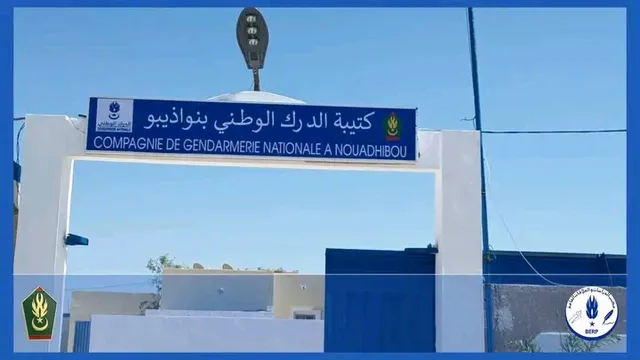
A few days earlier, on Saturday, October 31, the navy intercepted a boat off Nouadhibou carrying 134 people of several nationalities, 118 men, 14 women and two children, according to an army statement. And at dawn on Thursday, November 5, the Nouadhibou gendarmerie company said it had foiled an irregular migration attempt from the autonomous port of Nouadhibou, which it said a group of sailors had planned using a boat belonging to a worker in a company's fleet.
Over the year as a whole, the Spanish Interior Ministry said on Tuesday, November 3, that Mauritania had intercepted 37 boats bound for the Canaries since the start of 2026, preventing more than 4,300 people from continuing their journey, including one boat carrying 204 migrants, 28 of them minors. The ministry said Spain deploys 40 National Police and Civil Guard officers in Mauritania, equipped with two boats, a helicopter and 14 four-wheel-drive vehicles.
Mauritanian-Spanish cooperation
The figures coincided with the visit to Nouakchott of Spanish Interior Minister Fernando Grande-Marlaska on November 3, during which he was received by President Mohamed Ould Cheikh El Ghazouani. In talks with his Mauritanian counterpart, Mokhtar Ould Ahmed Bousseif, Grande-Marlaska described Mauritania as a "strategic partner and ally", while the Mauritanian minister outlined the national approach to fighting irregular migration, which combines security, legal, humanitarian and development dimensions, according to the Mauritanian News Agency.
The Spanish minister praised the integration of a Mauritanian liaison officer into the regional coordination centre in the Canaries and the work of the joint police investigation team deployed in Nouadhibou, asked for the model to be replicated in Nouakchott, and stressed the need to step up returns.
At sea, the Spanish patrol vessel Centinela ended a ten-day working visit to the autonomous port of Nouadhibou on November 5, which, according to the national army, included training in maritime navigation, positioning systems, safety and firefighting techniques and rapid-intervention methods.
Borders in the 2026-2030 strategy
The same day, Nouakchott hosted a consultation meeting between the Interior Ministry's directorate-general for territorial administration and technical and financial partners on developing integrated border management under the national migration management strategy for 2026-2030. The director-general for territorial administration, Zayed El Adhan Ould Vall Oumm, said the country's land and sea borders, which exceed 5,800 kilometres, make stronger control resources and closer coordination with neighbouring countries "a pressing necessity".
The meeting, organised with European Union support, covered five areas, including the modernisation of 82 border crossing points, better management of the maritime domain and greater involvement of local communities in managing border areas.