Madar (Nouakchott) - The debate over a third presidential term dominated a weekend in which several parties opened their political season, with the opposition declaring its rejection, a government minister publicly defending President Mohamed Ould Cheikh El Ghazouani's continuation, and majority parties restating their commitment to an "inclusive" dialogue days after a public row over the make-up of the dialogue's supervisory committee.
Opposition: "three noes" and no tampering with the constitution
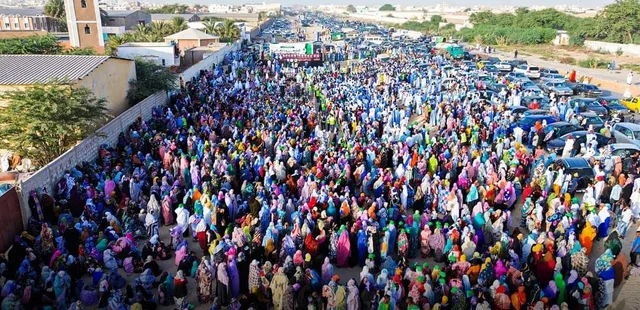
The National Rally for Reform and Development (Tawassoul) opened its political season on Saturday, October 17, 2026, around what its president Hamadi Ould Sidi El Moctar called "the three noes": no to a third term, no to restrictions on freedoms and no to corruption, according to local media reports of his speech at the party headquarters in Nouakchott.
Ould Sidi El Moctar said a third term would be "a threat to national unity and cohesion" and a step back from the peaceful transfer of power, and that statements by officials on the issue were "a flagrant violation of the constitution". He also urged the government to halt non-urgent projects and tighten market controls to tackle rising prices.
On the same day, the head of the opposition "Forces of Rescue" coalition, MP Mohamed Lemine Sidi Maouloud, warned that tampering with presidential term limits "opens the door to coups and chaos", recalling the 2006-2007 consensus on peaceful alternation of power.
On Sunday, MP Biram Dah Abeid, in an audio message obtained by Madar, praised what he called Tawassoul's "mighty" stance and urged parties, students and civil society to follow its rejection of "extra terms, violations of freedoms and breaches of the constitution", accusing majority parties of dragging the country into crises.
Majority: a "national necessity" through the constitution
By contrast, Trade and Tourism Minister Zeinab Mint Ahmednah wrote on Facebook on Sunday evening that President Ghazouani remains "the most capable choice" to lead the country, given what she described as a lack of alternatives with more convincing visions. She called his continuation for a third term a "national necessity", provided it comes "through respect for the constitution and institutions, a free popular will and a clear legal path".
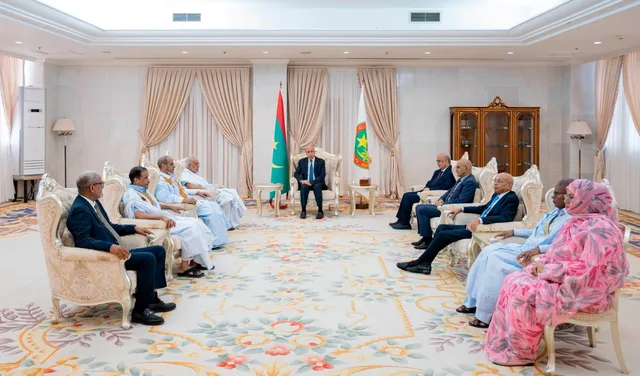
It is one of the clearest statements on the issue by a cabinet member, after President Ghazouani said in July that talk of a third term was "premature" and aimed at "disrupting the work under way".
Majority and the dialogue: calls for inclusion
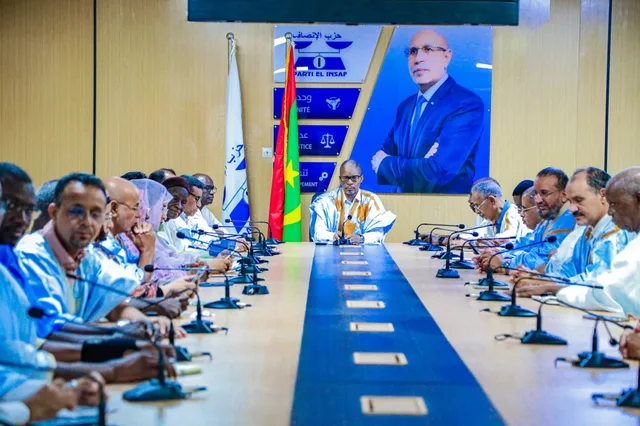
On the dialogue front, the Mauritanian Union and Change party (Hatem) stressed, after a meeting of its political bureau chaired by Saleh Hanena, the need to involve all components of the majority in preparing and organising the national dialogue, reaffirming its commitment to its success as a chance "to address existing imbalances", according to Sahara Medias.
The Nama party, in a statement issued on Monday, October 19, after a meeting of its standing committee, called for removing the obstacles that "caused previous attempts to abort", involving all parties at every stage and setting clear mechanisms to implement the dialogue's outcomes, while maintaining a climate of calm.
These positions follow the announcement on Friday, October 16, of the majority coalition's eight representatives on the supervisory committee, including INSAF party leader Mohamed Ould Bilal as the committee's vice-chair. The Front for Citizenship and Justice froze its membership of the coalition and the Unity and Development party rejected the line-up.
What next?
Political parties agreed on September 3 on a 20-member supervisory committee — 7 for the majority, 7 for the opposition and 6 for civil society — chaired by Moussa Fall, whom President Ghazouani tasked with the role in August. The dialogue sessions have not yet begun.
The weekend puts the third-term question at the heart of the pre-dialogue debate, in a country where political dialogues have recurred for a quarter of a century, between those who see term limits as a red line and those who argue the current president's continuation can pass through the institutions.