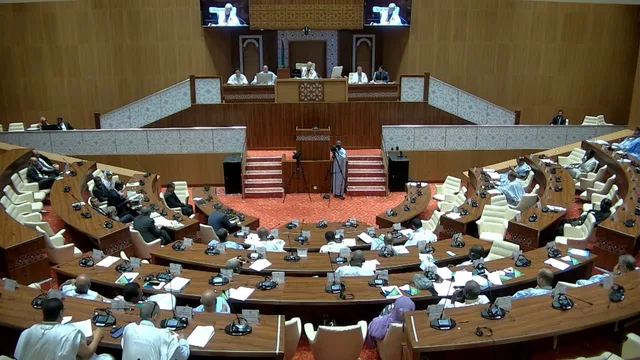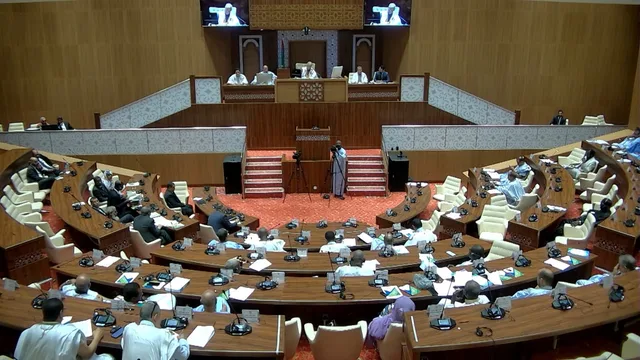
Madar (Nouakchott) - Mauritania's National Assembly has begun examining a package of three financing agreements signed with the International Development Association (IDA), the World Bank Group's concessional lending arm. They include loans totalling €69.1 million, alongside grants, for social safety nets, education and digital transformation. The economic affairs committee examined two bills covering two of the agreements on Friday morning, 13 November 2026, according to the Mauritanian News Agency (AMI).
At the meeting, chaired by the committee chair, the minister of economic affairs and development presented the objectives of the two bills: the first authorises ratification of the financing agreement signed on 21 August 2026 for the social resilience and productive social safety nets operation, and the second that of the 16 September 2026 agreement on additional financing for the West Africa Regional Digital Integration Program (WARDIP - SOP1), under the Digital Transformation for Africa initiative.
The Assembly's conference of presidents had scheduled, at its meeting on Wednesday 11 November chaired by the Assembly president, three bills relating to these agreements, referring them to the relevant technical committees for review before they go to public sittings for approval. The third concerns an agreement signed on 21 August 2026 to finance an operation to improve the quality, outcomes and access for all in education.
The government approved the three bills at the Council of Ministers on 14 October 2026, and the council's statement at the time set out the amounts and repayment terms.
About 1.2 billion ouguiyas for social safety nets
According to the Council of Ministers statement, financing for the resilience and productive social safety nets operation consists of a grant of 5.6 million Special Drawing Rights (SDR) and a loan of €19.7 million, equivalent to about 1.2 billion new ouguiyas, repayable over 25 years including a 5-year grace period, at an annual interest rate of 1.5% on the disbursed balance, with a commitment fee of 0.5% a year on the undisbursed balance.
The financing aims, according to the statement, to make the adaptive social protection system more efficient. That system relies on delivery tools including the social registry, the national social safety nets programme "Tekavoul" and the shock response system.
It comes after the permanent survey of household living conditions showed that the monetary poverty rate fell from 28.2% in 2019 to 25.7% in 2025, extreme poverty from 12.8% to 11.2% and multidimensional poverty from 58.7% to 54.7%, according to the minister of economic affairs and development on 2 November. It also coincides with the finance minister's statement that the 2027 draft budget raises allocations for the "Oun" operation by more than 6 billion ouguiyas and cash transfers to vulnerable households by 1.6 billion.
Education: about 1.57 billion ouguiyas for the learning support plan
The education agreement consists, according to the Council of Ministers statement, of a grant of 9.2 million SDR and a loan of €23.6 million, equivalent to about 1.57 billion new ouguiyas, repayable over 25 years including a 5-year grace period, at an annual interest rate of 1.5% with a commitment fee of 0.5% on the undisbursed balance.
The operation to improve the quality, outcomes and access for all in education directly supports the Priority Learning Support Plan (2026-2030). It aims to improve the quality of early childhood and primary education and widen access to secondary school, particularly for girls in rural areas and for groups affected by forced displacement, the statement said.
According to the living conditions survey, the gross primary enrolment rate rose from 79.9% to 96.1% between 2019 and 2025, against slower growth at secondary level, from 31.9% to 36.8%, the stage to which the agreement aims to widen access. Prime Minister Mokhtar Ould Djay told MPs that 7,600 classrooms had been built since 2019.
Digital: €25.8 million for broadband and e-payments
On the digital side, the additional loan amounts to €25.8 million, equivalent to about 1.136 billion new ouguiyas, repayable over 20 years after a 5-year grace period, at 1.5% a year with a commitment fee of 0.5% on the undisbursed balance, according to the Council of Ministers statement.
The statement said this financing will help deliver the national digital transformation agenda, in particular by extending accessible, quality broadband digital infrastructure and developing online services and electronic payments.
The agreement is being examined a day after the launch of the national e-commerce strategy 2026-2030 on Thursday 12 November, which rests on four pillars including trust and security in electronic transactions and wider digital inclusion, and follows a workshop in Nouadhibou on Mauritania's second international submarine cable on 10 November and Mattel's commercial 5G launch in Nouakchott and Nouadhibou on 9 November.
Concessional terms during the IMF review
Adding up the figures in the Council of Ministers statement, loans under the three agreements total €69.1 million, plus grants of 14.8 million SDR, while the ouguiya equivalents given in the statement come to about 3.9 billion new ouguiyas in all. All three loans carry an annual interest rate of 1.5% and a five-year grace period.
The agreements are being examined as the IMF mission for the first review of Mauritania's programme, scheduled to stay in Nouakchott until 13 November, winds up, and after the minister of economic affairs and development discussed expanding the infrastructure partnership with a World Bank delegation on 6 November.
What has not yet been announced
AMI did not report MPs' contributions at the economic affairs committee meeting or the date of the public sittings to approve the agreements, and by Friday afternoon had reported no committee meeting on the education agreement. The Council of Ministers statement did not give the number of households or pupils who will benefit from the new financing, nor an implementation timetable.