Madar (Nouakchott) - An International Monetary Fund mission led by Felix Fischer, the Fund's mission chief for Mauritania in the Middle East and Central Asia Department, is continuing its work in Nouakchott until Friday 13 November 2026, as part of the Article IV consultations and the first review of the programme supported by the Extended Credit Facility (ECF) and the Extended Fund Facility (EFF), according to a statement by the Central Bank of Mauritania.
The mission's latest announced meeting took place on the evening of Tuesday 10 November, when the Minister of Real Estate, State Property and Land Reform, Mamoudou Mamadou Niang, received the mission chief, accompanied by the IMF resident representative in Mauritania, Younes Zaher, according to the Mauritanian News Agency (AMI).
According to AMI, the talks covered cooperation between Mauritania and the Fund and ways to develop it, "particularly in the areas of land governance and digitalisation, and the establishment of a reliable and secure national digital land registry system", in the presence of the ministry's secretary general, Mohamed Mahmoud Hamadi, and sector officials.
From the central bank to the food security commission
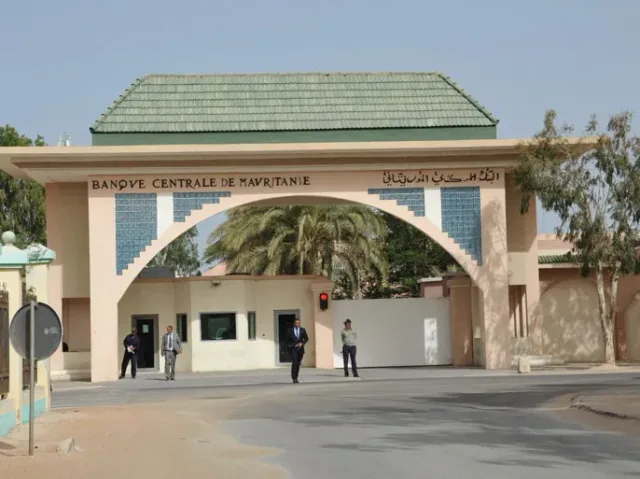
The mission began on Monday 2 November at the Central Bank of Mauritania, where Governor Mohamed-Lemine Dhehby received it in the presence of Finance Minister Codioro Moussa N'Guenor and Minister of Economic Affairs and Development Mohamedou Ould M'Haimid. According to the bank, the meeting presented the mission's objectives and covered the economic situation and the organisation of the work.
The next day, the finance minister held a meeting with the mission that, according to AMI, covered public finance management, the economic outlook and progress in economic and financial reforms, in the presence of the director general of the budget.
On 4 November, the Food Security Commissioner received the mission. She outlined the country's efforts on food security and social protection for vulnerable groups, and the two sides assessed the performance of social policies through the commission's programmes, AMI said.
A 42-month programme
This first review follows the IMF Executive Board's approval in June 2026 of new 42-month ECF and EFF arrangements worth SDR 70.82 million, equivalent to 55% of Mauritania's quota or about $95.8 million, together with the fifth review of the Resilience and Sustainability Facility (RSF) arrangement. These decisions allowed an immediate disbursement of SDR 78.78 million, about $105.6 million, according to the Fund's statement at the time.
The Fund set three pillars for the new programme: consolidating macroeconomic stability by strengthening institutions and policy frameworks, reducing poverty and supporting private sector-led growth, and further strengthening governance, including that of state-owned enterprises. It noted that all quantitative performance criteria for end-December 2025 had been met under the previous programme and that enshrining the fiscal rule in law had been completed with some delay.
Deputy Managing Director Kenji Okamura called at the time for continued revenue mobilisation, more efficient spending, reform of the state-owned enterprise sector and the preservation of fiscal space for priority social and investment spending, saying the social registry "provides a solid basis" for better targeting the poorest. He also urged stronger liquidity management, a deeper foreign exchange market and greater exchange rate flexibility, stronger banking supervision and a consolidated anti-corruption framework.
A tight economic context
The review comes as inflation reached 9.3% year on year in September 2026, up from 1.5% a year earlier, according to official figures from the national statistics agency, prompting the central bank to raise its policy rate to 7.25% and the reserve requirement ratio to 15% in early November.
It also coincides with the examination of the 2027 finance bill, an annex of which projects the state's financial debt at 219.3 billion ouguiyas at the end of 2026. Before MPs, Prime Minister Mokhtar Ould Djay said the external debt ratio had fallen from 65.6% to 39.9%, as we reported in our summary of his replies before the confidence vote.
Another IMF technical mission had visited Nouakchott from 19 October to 1 November to discuss public finance and energy, and Madar traced in an earlier analysis how Mauritania's debt has evolved in IMF reports since August 2024.
Other partners and the next step
On the same day the mission met the real estate minister, the Minister of Economic Affairs and Development received a high-level delegation from the International Finance Corporation (IFC), part of the World Bank Group, including its director for West Africa and the Sahel, Sameh Wahba, to discuss private investment, public-private partnerships and investment in infrastructure and natural resources, according to AMI.
The mission's findings have not yet been published. IMF missions usually conclude with a press statement setting out their preliminary findings, while completion of the review is subject to approval by the Fund's Executive Board.