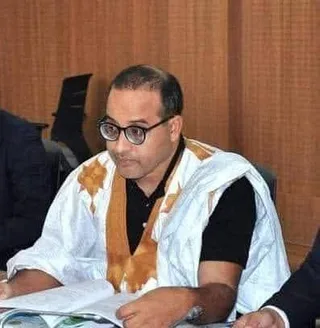
Madar (Nouakchott) - Prime Minister El Moctar Ould Djay said on Sunday, October 18, 2026, that Mauritania's debt is going through "its best period", citing external debt of about 32% and fewer than 15 African countries in a better position, in a press statement at the end of his tour of Nouakchott. What do international institutions' reports say about the debt since he took office in August 2024?
When he took office
When Ould Djay was appointed prime minister in August 2024, the latest International Monetary Fund (IMF) data, published that December, put public debt at about 47.9% of GDP at end-2023 and external public debt at about 41.4% of GDP, or some $4.03 billion, with the risk of debt distress rated "moderate".
The figures today
In its June 2026 report, the IMF estimated public debt at 43.5% of GDP at end-2024 and 39.9% at end-2025. In its letter attached to the same report, the government said public debt fell to 39.2% of GDP at end-2025, "below 40 percent for the first time since 2012", and that external debt reached 32.7%, compared with about 37% at end-2024. That last figure matches the rate cited by the prime minister.
Debt service is falling, according to the IMF, from 7.1% of GDP in 2025 to a projected 6% in 2026, while the overall budget deficit narrowed from 1.4% of GDP in 2024 to 0.3% in 2025.
Falling ratios, a stable stock
IMF tables show, however, that the stock of external public debt in dollars has stayed almost flat: about $4 billion in 2023, $4.06 billion in 2024 and $4.03 billion in 2025, with a rise to about $4.29 billion projected for 2027. The decline in the ratios is therefore mainly due to GDP growth, driven by gas and gold, rather than to a reduction of the debt itself.
The IMF expects public debt to edge up to 40.7% of GDP in 2026 before stabilising around 38% over the medium term.
An unchanged rating
The rating has not changed since Ould Djay took office: the joint IMF-World Bank debt sustainability analysis still places Mauritania at "moderate" risk, with "some space to absorb shocks". The World Bank confirms the same assessment on its Mauritania page.
On the African comparison, the IMF's list of debt ratings for low-income countries, updated in March 2026, contains no African country at "low" risk; Mauritania shares the "moderate" rating with several other African countries, and the list does not include middle-income countries such as Morocco, Algeria or Egypt. The prime minister did not specify which indicator he used for his comparison.
What the ratios do not show
The IMF points to liabilities not counted in public debt, notably a $567.8 million loan (4.7% of GDP) taken by the Mauritanian Hydrocarbons Company to finance the state's share in the Greater Tortue Ahmeyim (GTA) gas project, as well as SNIM's non-guaranteed debt and public-private partnership commitments.
It also notes that foreign exchange reserves fell from 8.2 months of non-extractive imports in 2021 to 5.4 months in 2025, that old arrears remain unresolved, including debts to the Arab Fund for Economic and Social Development, and that risks stem from commodity prices and higher oil import costs due to the war in the Middle East, which forced a supplementary 2026 budget.
The financing debate
Domestically, opposition MP Mohamed Bouy Cheikh Mohamed Fadel said Mauritania received about $1.4 billion from the World Bank between 2019 and 2026, compared with $1.3 billion between 1960 and 2019, according to Maghreb Emergent; the government replied that approved financing is not all debt and that grants and undisbursed amounts must be separated out.
On Sunday, Ould Djay defended borrowing to finance service projects, saying about 80 billion ouguiya of the financing for the projects he visited had been mobilised locally, including a 74-billion sanitation project funded by the state.