Madar (Nouakchott) - After nine days in which European vessels stopped fishing in Mauritanian waters, Mauritania and the European Union now have a politically agreed new fisheries protocol, announced by the European Commission on Monday, 23 November, and outlined by the fisheries minister to the Council of Ministers on Wednesday, 25 November. But as of Thursday, 26 November 2026, neither side has published the protocol's text, the financial contribution or the quotas for each vessel category, and European vessels will not return before signature, which Brussels expects in February.
What Nouakchott announced
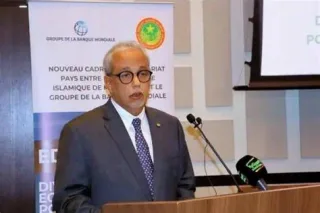
According to the Council of Ministers communique published by the Mauritanian News Agency (AMI), the Minister of Fisheries and Maritime and Port Infrastructure presented a statement on "the main points of the draft new fisheries agreement", which she said focuses on preserving fish stocks, ensuring their sustainable use and increasing added value inside Mauritania.
The communique lists six elements: cutting the quotas granted to European vessels "by more than half", more jobs for Mauritanians "with clear hiring targets", a larger contribution to supplying the local fish market, a 10% increase in the fees paid by European vessel owners, "significant additional funding" for port infrastructure, and stronger commitments on landing and first processing of fish in Mauritania.
The ministry had announced the agreement on Monday, 23 November, saying it rests on two priorities, "ensuring the sustainable preservation of fisheries resources" for current and future generations and increasing their value at national level, and that a European delegation would visit Mauritania in the coming days to present the details. Neither statement gave the protocol's duration, the amount paid by the EU or the authorised catch volumes.
What Brussels said
In Brussels, the Commission's Directorate-General for Maritime Affairs and Fisheries said on 23 November that the two sides had reached a "political agreement" on a new protocol to their Sustainable Fisheries Partnership Agreement, giving the EU fleet access to fishing opportunities and providing financial support for Mauritania's fisheries sector and blue economy, and recalled that the relationship dates back to 1987. "I am very pleased that the European Union and Mauritania have reached an agreement on a new fisheries Protocol," said EU Commissioner for Fisheries and Oceans Costas Kadis. The two sides will finalise the remaining "outstanding elements" with the aim of signing "as soon as possible", the Commission said.
According to Agence Europe, the new protocol will run for four years. Kadis said it rests on a "clear and transparent methodology" taking into account the value of catches, the use of fishing opportunities and scientific advice on the state of stocks. A DG MARE team will travel to Mauritania to finalise technical elements; internal procedures will start in December, Council approval is expected in January, with signature and entry into force in February. He said he could not disclose further details before a meeting at the end of the month.
Quotas: two accounts so far
While Nouakchott speaks of European quotas cut by more than half, Spain's Agriculture and Fisheries Minister Luis Planas welcomed "excellent news" on X and called the protocol "very important for our fishing sector", the Spanish daily Atlántico reported, and said quotas remain unchanged, according to Agence Europe. The Commission has published no figures by category, and neither side has said which categories the cut applies to.
For scale, the agreement page on the Commission's website shows that the expired protocol allowed EU vessels to catch up to 280,050 tonnes a year, of which 225,000 tonnes, about 80% of the total, went to pelagic freezer trawlers targeting small pelagics (up to 19 vessels), against 5,000 tonnes of crustaceans for 18 vessels and a reference tonnage of 14,000 tonnes for tuna seiners. Spain's fleet numbered about 30 vessels, mostly shrimp trawlers (18) followed by tuna seiners (7), according to the Spanish Agriculture and Fisheries Ministry.
The Sahara Medias website had reported that the Commission proposed, according to a note submitted by Latvia to the EU Council in June 2026, cutting the pelagic freezer trawler quota from 225,000 to 93,000 tonnes a year. Neither side has confirmed whether the new protocol uses that figure.
Money: higher fees, undisclosed contribution
Under the expired protocol, the EU paid 60.8 million euros a year, including an average 3.3 million for sectoral policy support, or 16.5 million over the protocol's life, according to the Commission. The Spanish daily Faro de Vigo reported that the EU paid Mauritania 304 million euros over five years, of which 287.5 million for access to fishing grounds, as we reported before the protocol expired.
Before expiry, the dispute was mainly about money: the government sought "more favourable economic terms", while Javier Garat, secretary general of the Spanish Fisheries Confederation, said Mauritania was asking for more than the 60 million and the EU was offering less "because fishing opportunities are also lower". The 10% fee increase for vessel owners announced by the government matches the rate European vessel owners had offered to pay before expiry, according to La Voz de Galicia. Neither side has announced the total the EU will pay or the share for sectoral and port support.
When vessels return
European vessels left Mauritanian waters when the protocol expired at midnight on 14 November, after the coast guard ordered them to Nouadhibou port for exit formalities. The Commission's agreement page still lists it on Thursday as "dormant", meaning an agreement in force with no applicable protocol. Under the timetable set out by Kadis, the new protocol will not enter into force before February, the date the Spanish Fisheries Confederation (Cepesca) wants the fleet back, according to the Spanish website Demócrata.
On the European side, Andalusian ports estimated the losses from the halt at 40 to 50 million euros, while Spanish public broadcaster RTVE spoke of "about a thousand local sailors" who worked aboard the European vessels, with no official Mauritanian figure.
What remains open
Both sides now await the European delegation's visit to Nouakchott to finalise technical elements, followed by the EU approval process. Until then, key questions remain without an official answer: the size of the EU financial contribution, the new quotas for each category, the hiring targets cited by the government and the volume of catches to be landed in Mauritanian ports. The agreement follows talks that began in January and the confirmation of the deal by the fisheries ministry on 23 November.