Madar (Nouakchott) - The fisheries protocol between Mauritania and the European Union expires at midnight on Saturday 14 November 2026, with neither side having officially announced agreement on a new protocol by this morning. The Spanish press reports a new European offer awaiting a reply from Nouakchott, and European vessels starting to leave Mauritanian waters.
The protocol sets the fishing opportunities open to European vessels in Mauritanian waters and the financial contribution paid by the EU. It runs "from 15 November 2021 to 14 November 2026", according to the agreement's page on the European Commission website. The sustainable fisheries partnership agreement itself was signed and took effect on 15 November 2021 for six years, renewing automatically, according to the same source.
As of 10:00 GMT this morning, neither the Mauritanian News Agency (AMI) nor the European Commission had published any announcement on the signing of a new protocol or an extension of the current one. Mauritania's last public official position on the talks dates from 22 October, when the minister of fisheries and maritime and port infrastructure held talks with the European commissioner for fisheries and oceans on "the strategic axes of the ongoing negotiations", with both sides stressing the importance of reaching "balanced results", according to AMI.
A new European offer awaits a reply
The Spanish daily La Voz de Galicia reported this week, citing industry sources, that the European Commission had put a new offer "with higher numbers" to Mauritania, both in the EU's financial contribution and in the fees paid by shipowners, after the owners offered to pay up to 10% more for their licences. The sources did not specify the size of the increase or whether Nouakchott had a deadline to reply.
In its Saturday edition, the paper quoted Spain's Ministry of Agriculture, Fisheries and Food as still hoping for a last-minute deal, while noting that there was still no news, "at least official", from Nouakchott on its response to the latest offer. According to the paper, the ministry said Spain "will keep pressing the European Commission to redouble its efforts and continue negotiating to reach an agreement on a strategic fisheries pact".
According to La Voz de Galicia, the Commission has dropped the option of extending the current protocol, which Spain, Portugal, the Netherlands and Latvia requested in October, preferring to negotiate a new protocol. The paper had reported since mid-October that the talks had stalled, after four rounds held since January.
Vessels leave, and a return is not imminent
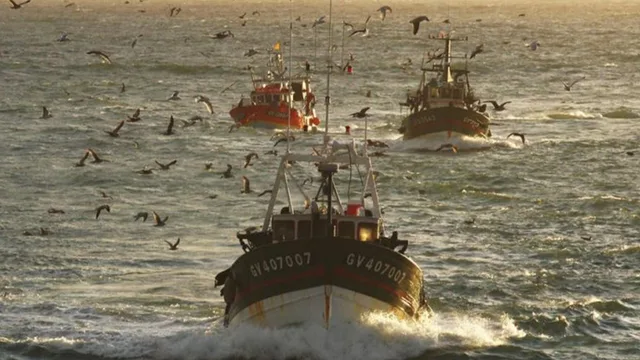
The Spanish ministry acknowledges, according to La Voz de Galicia, that vessels will leave Mauritanian fishing grounds in the coming days either way, deal or no deal, because any new protocol requires administrative procedures in Brussels and in Mauritania before the fleet can return. Based on past experience, the paper estimates that these will not be completed in less than six months.
The paper says the outgoing protocol reserved around 100 licences for Spanish vessels, 30 of which were in use this year, including 12 crustacean vessels from Huelva and 7 vessels from Las Palmas. It adds that Spain's General Secretariat for Fisheries has offered affected owners alternative grounds, including Guinea-Bissau for crustacean vessels. Andalusia's regional government had warned that 60 European vessels would be halted when the protocol expires.
Separately, the Spanish daily Faro de Vigo reported on Friday that the Spanish research vessel Miguel Oliver had left Vigo for Mauritanian waters on a survey of commercially valuable demersal resources, a departure Spain's agriculture and fisheries ministry confirmed to the paper. According to the paper, the survey was approved under the agreement's joint scientific committee and is to be prepared "in close collaboration" with Mauritania's oceanographic and fisheries research institute (IMROP). In early November, Japan floated out Mauritania's fisheries research vessel Masaki Nakamura.
The outgoing protocol in figures
The current protocol allows vessels from ten member states, France, Spain, Portugal, Germany, Lithuania, Latvia, Poland, the Netherlands, Ireland and Italy, to catch up to 280,050 tonnes a year of crustaceans, demersal fish, tuna and small pelagics, in return for an EU financial contribution of €60.8 million a year, of which an average of €3.3 million a year supports Mauritania's fisheries sector policy, or €16.5 million of sectoral support over the protocol, according to the European Commission.
Pelagic freezer trawlers take the largest share, with a ceiling of 225,000 tonnes a year and a maximum of 19 vessels, paying €75 per tonne of sardine and sardinella and €140 per tonne of mackerel and horse mackerel. The protocol also opens tuna fishing to 29 purse seiners, with a reference tonnage of 14,000 tonnes, and to 15 pole-and-line vessels and surface longliners, with 7,000 tonnes, plus 5,000 tonnes of crustaceans for up to 18 vessels at €450 per tonne.
The protocol grants no fishing opportunities for cephalopods, including octopus, which accounts for 10.8% of the volume of Mauritania's fish exports and over 53% of their value. Sectoral support funds, according to the Commission, small-scale fisheries and their management, monitoring, control and surveillance, the fight against illegal, unreported and unregulated fishing, scientific capacity, and the protection of fragile ecosystems and marine protected areas.
What is at stake for Mauritania
In Mauritania, the expiry comes as parliament examines the 2027 finance bill, whose economic and financial report projects fisheries revenue of 10.10 billion ouguiyas in 2027, and whose annexed natural resources report described the expiry of the EU fisheries protocol as "the main factor of uncertainty".
The deadline coincides with a series of field visits by the fisheries minister to the sector's institutions, most recently on Friday 13 November at Tanit port, where fish processing and storage plants and an ice factory are under construction, according to AMI. The official report did not mention the negotiations with the EU.
Between May and September 2025, the EU carried out an evaluation of the current protocol, including an ex-ante assessment of a "possible future protocol", after consultations with stakeholders in the EU and Mauritania and economic, social and environmental analyses, according to the summary published by the EU Publications Office.
What has not yet been announced
Neither side has yet officially disclosed the content of the latest European offer, Mauritania's position on it, or the date of a new round of talks. Nor has it been announced whether any new protocol would be applied provisionally upon signature, as happened with the current protocol in November 2021. Madar will follow developments.