Madar (Nouakchott) - Six days before the fishing protocol between Mauritania and the European Union expires at midnight on Saturday, 14 November 2026, no renewal deal had been announced by Sunday evening, 8 November. The European Commission has formally notified member states that EU vessels will no longer be allowed to fish in Mauritanian waters after that date, while the Spanish press reports a last-minute meeting between the two sides on Monday.
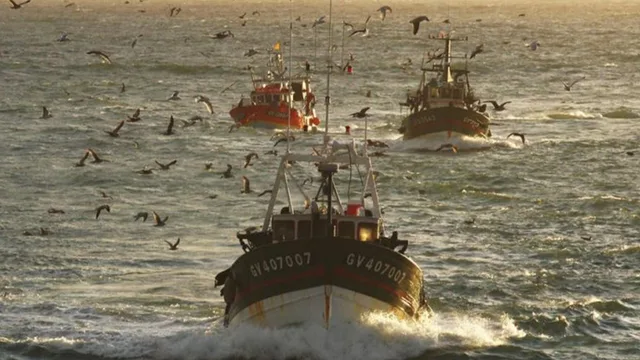
It is the EU's largest fisheries agreement with a non-EU country: it allows vessels from ten member states to catch up to 280,050 tonnes a year of shrimp, demersal fish, tuna and small pelagics in Mauritania's economic zone, in return for an EU financial contribution of 60.8 million euros a year, including on average 3.3 million euros to support Mauritania's sectoral fisheries policy, according to the agreement's page on the European Commission website.
Formal notice to leave
The Commission's notice, quoted on Friday, 6 November, by the Spanish daily La Voz de Galicia, states that "the current implementing protocol of the Sustainable Fisheries Partnership Agreement between the European Union and the Islamic Republic of Mauritania will expire at midnight on 14 November 2026" and that "from that date, Union vessels will no longer be authorised to carry out fishing activities in the Mauritanian fishing zone".
According to Andalusia's regional government, the expiry will suspend the licences of 60 EU vessels, 25 of them based in Andalusian ports, and could put some 500 direct and indirect jobs at risk across the value chain, particularly in the port of Cadiz, where much of the fish caught off Mauritania is landed and auctioned, as well as in Algeciras, Seville and Huelva.
"We cannot allow the lack of a timely solution to leave our vessels tied up in port," said Andalusia's regional minister for fisheries, Ramon Fernandez-Pacheco, urging Madrid and Brussels to explore "all possible avenues", whether provisional application of a new protocol or a transitional arrangement.
Galicia's regional minister for the sea, Marta Villaverde, called on the European Commission to make a "last effort" to reach a deal, warning that if there is no extension, Brussels must have prepared alternatives such as access to other fishing grounds or financial compensation for the enforced halt.
A meeting on Monday, a ratification that will take weeks
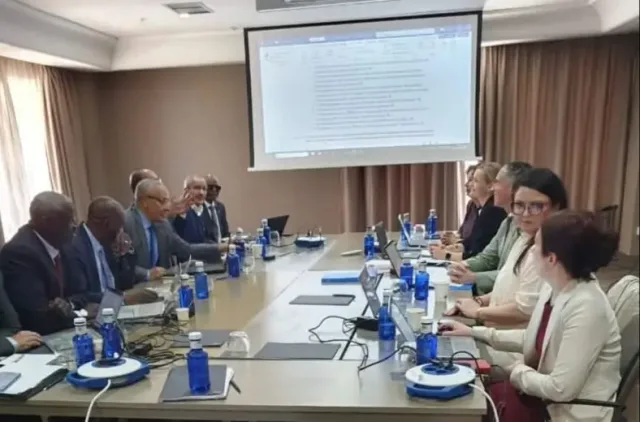
The Spanish daily Faro de Vigo reported on Saturday, 7 November, that the European Commissioner for Fisheries and Oceans, Costas Kadis, is due to meet the Mauritanian side on Monday in a last attempt to close the negotiations. Even if a deal is reached, the paper added, vessels could not resume fishing until ratification, a process that would take weeks "in the best of cases". Neither the Mauritanian nor the European side had officially announced the meeting by Sunday evening.
The paper recalls the timeline of the current protocol: its basis was laid on 28 July 2021, the Commission submitted its proposal to the Council of the EU on 28 September, the Council authorised provisional application on 11 November and the protocol was signed on 15 November 2021, more than three months in all. At the time, two annual extensions of the previous arrangement had spared the fleet a halt. This time, according to Faro de Vigo, the Commissioner's team ruled out an extension in a meeting with MEPs, arguing it would take almost as long as approving a new agreement.
Spain, Portugal, the Netherlands and Latvia asked the Commissioner in October to speed up the negotiations and, failing a deal before 14 November, to consider extending the current protocol through the tacit renewal mechanism provided for in the partnership agreement.
The dispute over money
Neither side has officially detailed the outstanding issues. But sector representatives quoted by the Spanish press say the disagreement is mainly about the financial contribution: according to Faro de Vigo, Mauritania is seeking more money in exchange for access to its fisheries, while Brussels has not raised its offer. El Confidencial quotes Julio Moron, president of the Spanish Fisheries Confederation (Cepesca), as saying that Brussels is offering an amount proportional to the smaller fleet now covered by the agreement, while Mauritania is asking for the same amount as before.
According to La Voz de Galicia, vessel owners offered to take on a 10% increase in the fees they pay to fish. According to Faro de Vigo, the EU paid Mauritania 304 million euros over the past five years, including 287.5 million for access to the fishing grounds and 16.5 million in sectoral support.
Mauritania's Minister of Fisheries and Maritime and Port Infrastructure, Aissata Lam, held a video call with Kadis in October on ways to bring positions closer, stressing the importance of continued dialogue to reach "balanced results" that take shared interests into account, according to the ministry. Four rounds of negotiations have been held since January without a deal being announced, with the Spanish press reporting a stalemate as early as mid-October.
Spain's fleet hit hardest
According to Faro de Vigo, the agreement covers about fifty Spanish vessels, around a dozen of them from Galicia. Sources at Spain's Ministry of Agriculture, Fisheries and Food quoted by the paper said that "Spain continues to redouble its efforts and press for the European Commission to reach an agreement with Mauritania" and that "there is a week left that may be decisive, as contacts are intensifying".
The industry, for its part, is pessimistic. The director of the European fishing fleet association Europeche, Daniel Voces, said 14 November "will be a very sad day for the sector". The secretary general of the Spanish federation Cepesca, Javier Garat, called for the protocol to be concluded "as soon as possible" and for mechanisms allowing vessels to work in other fishing grounds or receive compensation, although such compensation is not provided for under the European Maritime, Fisheries and Aquaculture Fund. A manager at the producers' organisation Opromar warned that "no European vessel will be able to fish there, even with private licences", since the exclusivity clause in EU agreements bars private licences while the agreement remains in force.
What it means for Mauritania
In Mauritania, the deadline comes as the government counts on fishing revenue in its 2027 budget. According to the Economic and Financial Report published on Sunday by the Ministry of Finance among the annexes to the finance bill, fishing revenue is projected at 10.10 billion MRU in 2027, after a forecast of 10 billion in 2026, while the government financial operations table shows only 3.50 billion at the end of September 2026. The report lists this assumption as one of two that "deserve to be examined", with only 3.23 billion MRU collected in eight months.
The natural resources report annexed to the same bill described the expiry of the EU fisheries protocol as "the main factor of uncertainty" for fishing revenue next year.
The Economic and Financial Report says fishing accounts for 4.44% of GDP, short of a 5.4% target, provides 130,979 direct jobs, and that its activity rebounded by 14.3% in the second quarter of 2026 thanks to recovering catches of cephalopods and crustaceans.
Mauritania's official news agency AMI had published no official comment on the approaching deadline by Sunday evening. The partnership agreement itself, signed on 15 November 2021 for six years with tacit renewal, remains in force: only the protocol setting fishing opportunities and the financial contribution expires.