Madar (Nouakchott) - Mauritania's government has said the end of its fishing protocol with the European Union does not mean the end of the relationship, and that the priority in ongoing talks is to secure "more favourable economic terms" for Mauritanian interests. It is the first government position made public since the protocol expired at midnight on 14 November, set out by government spokesman Mohamed Ould Bebana at the press briefing on the Council of Ministers held on Wednesday 18 November 2026. The European Commission, for its part, says negotiations on a new protocol are "ongoing".
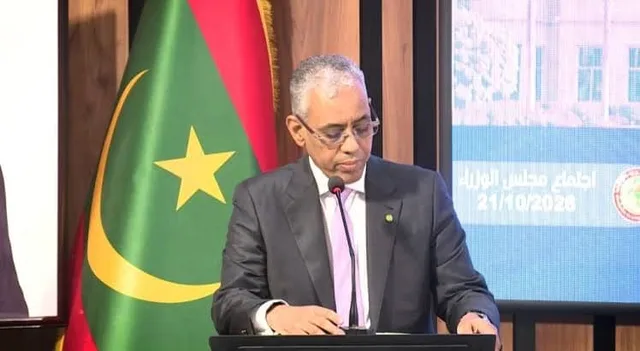
Ould Bebana, Minister of Culture, Arts, Communication and Relations with Parliament, said the end of the protocol does not mean the relationship with the European Union is over, as areas of cooperation remain open and can be developed through new understandings and agreements. He added that the government seeks to rebuild its frameworks of economic cooperation with partners so that Mauritania gains more from its natural resources.
The aim, he said, is to turn agreements with partners into tangible returns for the national economy and development, with the government's position rooted in the need to preserve marine wealth and other national resources while ensuring that the related partnerships bring the country the greatest possible benefit.
The last official Mauritanian position made public on the negotiations dated from 22 October, when Fisheries and Maritime and Port Infrastructure Minister Aissata Lam held talks with EU Fisheries and Oceans Commissioner Costas Kadis on ways to narrow differences, with both sides stressing the importance of reaching "balanced results".
What has ended
What expired is the protocol, the document setting EU vessels' fishing opportunities and the financial compensation, which ran from 15 November 2021 to 14 November 2026. The Sustainable Fisheries Partnership Agreement itself was signed and entered into force on 15 November 2021 for six years, tacitly renewable, and the two sides' fisheries partnership dates back to 1987, according to the agreement's page on the European Commission website, which now lists its status as "dormant", meaning an agreement in force without an applicable protocol.
According to the same page, the expired protocol allowed EU vessels to catch up to 280,050 tonnes a year of crustaceans, demersal fish, tuna and small pelagic species, in exchange for an EU financial contribution of 60.8 million euros a year, including an average of 3.3 million euros a year, or 16.5 million euros over the protocol's life, to support the national strategy for sustainable fisheries.
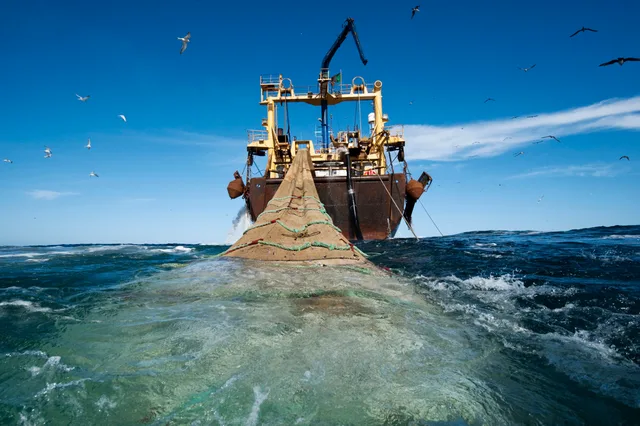
The lion's share went to pelagic freezer trawlers: 225,000 tonnes a year for a maximum of 19 vessels, followed by the tuna categories, open to 29 purse seiners, then crustaceans with 5,000 tonnes and 18 vessels, while the protocol offered no fishing opportunities for cephalopods. Vessels from 10 countries benefited: France, Spain, Portugal, Germany, Lithuania, Latvia, Poland, the Netherlands, Ireland and Italy.
Vessels out of the fishing grounds
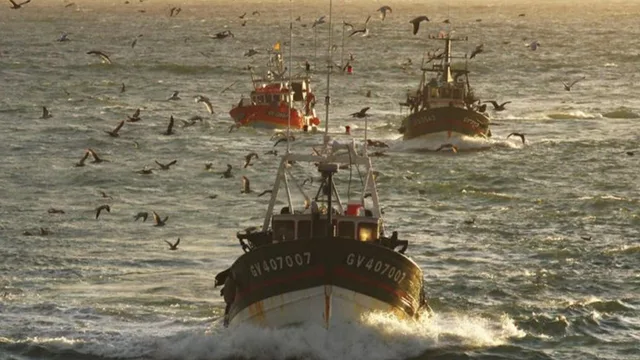
As the protocol expired, Mauritania's coast guard announced in a circular that it was no longer in force and told EU vessels to stop fishing and head to the port of Nouadhibou before midnight to complete the formalities for leaving the exclusive economic zone, according to extracts published by Spanish daily El Periódico, as Madar reported in its coverage of the first day without a protocol.
Spain's Ministry of Agriculture, Fisheries and Food says about 30 Spanish vessels, mostly shrimp boats, used the protocol and that most will temporarily move to Guinea-Bissau's fishing grounds. Andalusian ports put their losses at 40 to 50 million euros, while Spanish public broadcaster RTVE spoke of "around a thousand local sailors" left without work on board these vessels, with no official Mauritanian figure on the matter.
What each side says
In Brussels, European Commission fisheries spokesperson Maciej Berestecki said on Monday 16 November that "negotiations to agree a new fisheries protocol with Mauritania are ongoing", without giving further details, according to Spanish news agencies.
The Spanish government urged the Commission to "continue contacts" to conclude a new deal "as soon as possible", calling relations with Mauritania of "strategic importance" for all member states, and called for the talks to be pushed "to the highest level" by involving Commission President Ursula von der Leyen.
According to the Spanish press, Mauritania is asking for higher financial compensation, while the EU makes that conditional on better fishing opportunities. Before the expiry, the Commission put forward a new offer raising the financial compensation and shipowners' fees, "but without success", according to the EFE agency. The Sahara Medias website reported that the Commission had proposed, according to a note submitted by Latvia to the EU Council in June 2026, cutting the small-pelagic freezer trawler quota from 225,000 to 93,000 tonnes a year.
On the European industry side, Javier Garat, secretary general of the Spanish Fisheries Confederation (CEPESCA), said that "Mauritania is asking for more than the 60 million provided for in the current protocol, and the EU is offering less, because fishing opportunities are also lower", arguing that scientific advice calls for lower catches of small pelagic fish.
On Mauritania's political scene, the Tawassoul party called on 14 November for the agreement to be reviewed, saying the financial contribution Mauritania receives is "limited and does not match the real value of its marine wealth", and urging that no "concessions affecting the country's sovereign rights" be made.
What lies ahead
The issue comes as Parliament examines the 2027 finance bill, whose economic and financial report forecasts fisheries revenue of 10.10 billion new ouguiyas in 2027, and whose annexed natural resources report describes the expiry of the EU fishing protocol as "the main factor of uncertainty".
Even if a deal is reached, any new protocol will require administrative procedures in Brussels and Nouakchott before the EU fleet can return, which Spanish daily La Voz de Galicia, based on past experience, estimates will not be completed within six months, while Garat said the return could be delayed "at best until next spring".
As of Thursday morning, 19 November, neither side had officially disclosed the content of the latest offers exchanged or the date of a new negotiating round. Madar has followed the file since Andalusia warned that 60 EU vessels faced a halt in Mauritanian waters and will continue to follow developments.