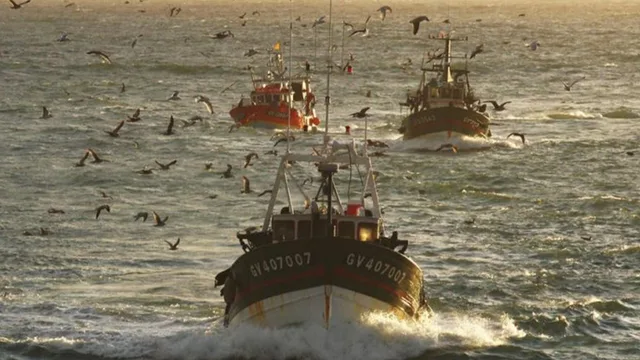
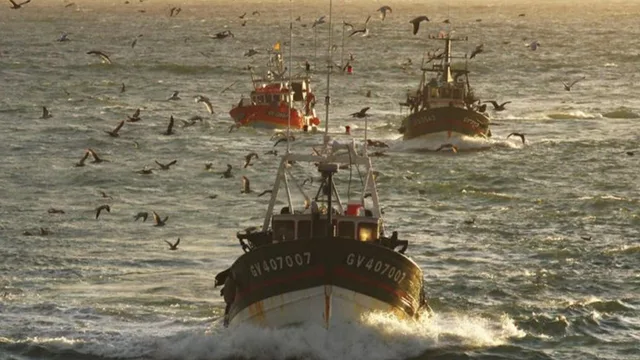
Madar (Nouakchott) - Mauritania and the European Union on Sunday, 15 November 2026, spent their first day without a fishing protocol in force, after the protocol implementing their sustainable fisheries partnership agreement expired at midnight on Saturday with no successor agreed. European vessels are leaving Mauritanian fishing grounds, Madrid is temporarily sending most of its boats to Guinea-Bissau, and European sources say the negotiations "are still continuing".
AFP reported on Sunday, citing several sources, that the agreement allowing European vessels to fish in Mauritanian waters ended on Saturday after the two sides failed to reach an understanding. European sources who asked not to be named told the agency that talks on renewing it are still continuing, and that Brussels had informed member states that it was about to expire.
What ended and what remains
What expired is the protocol, the document setting out fishing opportunities for European vessels and the financial compensation, which ran "from 15 November 2021 to 14 November 2026". The partnership agreement itself entered into force on 15 November 2021 for six years, tacitly renewable, according to the agreement's page on the European Commission website, as Madar reported on the eve of the expiry. That agreement remains the framework under which any new protocol is negotiated.
The expired protocol allowed vessels from ten European countries to catch up to 280,050 tonnes a year, in return for an EU financial contribution put by the Commission at 60.8 million euros a year, including an average of 3.3 million euros of sectoral support. AFP values the agreement at about 57.5 million euros a year.
In Mauritania, the coast guard announced in a circular that the protocol had expired and told vessels to stop fishing. According to the Spanish daily El Periódico, which published extracts, European vessels "are obliged to cease their fishing activities" and to head for the port of Nouadhibou by midnight "to complete the administrative and maritime formalities needed to leave the EEZ".
Spanish public broadcaster RTVE said vessels that stayed until the last moment will have to land their Mauritanian crew members, adding that the end of the protocol leaves "around a thousand local sailors" out of work. No official Mauritanian figure has been published on this. Maritime unions had called in October for a review of the seafarers' collective agreement and better pay.
Madrid: Guinea-Bissau and Portugal for now
Spain's Ministry of Agriculture, Fisheries and Food says about 30 Spanish vessels benefited from the protocol, most of them shellfish trawlers (18), followed by freezer tuna purse seiners (7) and non-freezer trawlers and bottom longliners (4). Their home ports include Huelva (12 shellfish vessels) and Las Palmas (6), as well as Marín, Burela, Algeciras, Bermeo and A Coruña.
Spanish minister Luis Planas said on X that he regretted the expiry and urged the European Commission to "pursue contacts" to reach a new protocol "as soon as possible". His ministry said Spain has temporary alternative fishing grounds in Portugal and Guinea-Bissau, and that most Spanish vessels will head to Guinea-Bissau while the Commission tries to close a new deal "after the deadline".
Madrid is pressing, according to the same sources, for negotiations "at the highest level" involving Commission President Ursula von der Leyen, to prevent vessels now fishing under EU flags from switching to other flags. A month ago, Planas and his counterparts from Portugal, the Netherlands and Latvia wrote to EU Fisheries and Oceans Commissioner Costas Kadis, calling for a deal and for alternatives for the fleet if it was not concluded on time.
A dispute over money and quotas
According to El Periódico, the negotiators held their positions to the end: Mauritania wants higher financial compensation, while the EU wants better fishing opportunities in return. Spanish agency EFE, citing industry sources, reported that the Commission had put a new offer to Mauritania raising the compensation and the fees paid by shipowners, "but without success".
News site Sahara Medias said the two sides held four rounds of talks over the past six months, and that the Commission proposed, according to a note submitted by Latvia to the EU Council in June 2026, cutting the quota for freezer trawlers targeting small pelagic fish from 225,000 tonnes a year under the expired protocol to 93,000 tonnes.
From the European industry side, the secretary-general of the Spanish fisheries confederation CEPESCA, Javier Garat, told Diario de Pontevedra that "Mauritania is asking for more than the 60 million in the current protocol, and the EU is offering less, because the fishing opportunities are also smaller", arguing that scientific advice calls for lower catches of small pelagics. He said the fleet's return could take "in the best case until next spring, if the agreement can be closed".
Losses on the European side
Huelva-based shellfish shipowners' association Anamar estimates that its 15 vessels operating in Mauritania will lose more than 5 million euros a month, and 30 million over six months, RTVE reported. The fish market at the port of Cádiz sold catches worth 13.2 million euros in 2025 thanks to the agreement, and 8.64 million in the first nine months of 2026, with the last auction of fish from Mauritanian grounds due there on Monday.
Andalusian ports earlier today put their losses at 40 to 50 million euros, and the regional government of Andalusia called on Madrid to seek diplomatic solutions for a new agreement.
The position in Nouakchott
As of 17:00 GMT on Sunday, the Mauritanian News Agency had published no statement from the Ministry of Fisheries and Maritime and Port Infrastructure or from the government on the protocol's expiry or the state of the talks. The last official position on record dates from 22 October, when Minister Aissata Lam and Commissioner Kadis discussed the strategic lines of the negotiations, while the minister visited Tanit port on Friday without the official report mentioning the file.
On the political front, the Tawassoul party said in a statement on Saturday that the financial contribution Mauritania receives is "limited and does not match the real value of its marine wealth", urging the government to make "no concessions affecting the country's sovereign rights" and to submit the exploitation of national resources to "a broad and transparent national debate".
This comes as parliament examines the 2027 finance bill, whose economic and financial report forecasts fisheries revenue of 10.10 billion new ouguiyas in 2027, and whose annexed natural resources report describes the expiry of the EU fishing protocol as "the main factor of uncertainty".
What remains unresolved
Neither side has officially disclosed the content of the latest offers exchanged, the date of a new round of talks, or how long it could take to conclude a new protocol and complete the administrative steps before vessels return. Madar will follow developments.