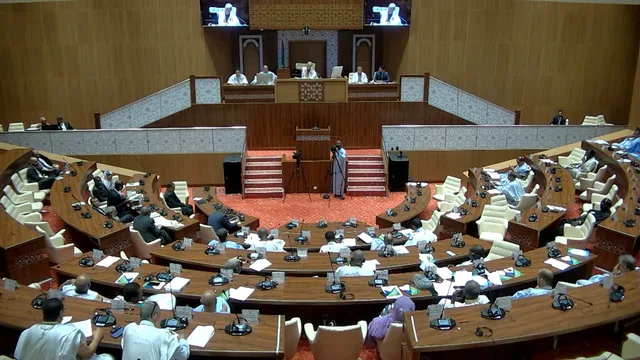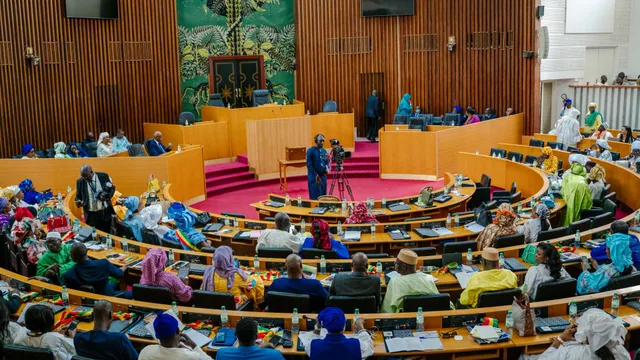
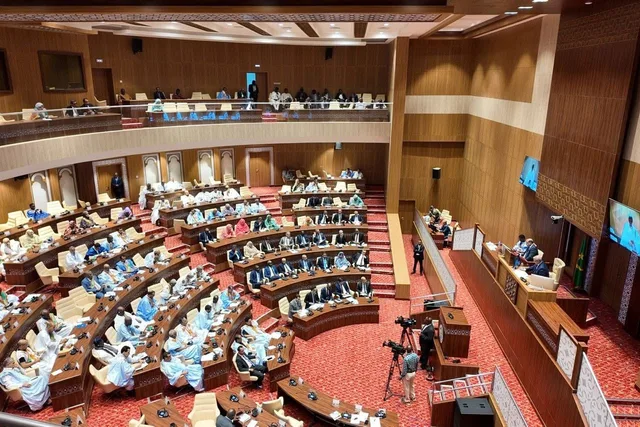
Madar (Nouakchott) - Mauritania's National Assembly is holding a plenary session from 10 a.m. on Monday, 9 November 2026, to debate and vote on the programme of Prime Minister Mokhtar Ould Djay's government, according to the schedule set by the Conference of Presidents and published by the Mauritanian News Agency (AMI). It is a decisive step for the programme the Prime Minister presented to MPs on Saturday, engaging the government's responsibility.
Meeting on Thursday, 5 November, under the chairmanship of the Assembly's first vice-president, Sidney Sokhona, the Conference of Presidents scheduled two sessions: the first on Saturday, 7 November, for the Prime Minister to present his programme and engage the government's responsibility under Article 42 of the Constitution, and the second on Monday to debate and vote on the programme. By a majority of those present, it set the total debate time at 7 hours 20 minutes, AMI said.
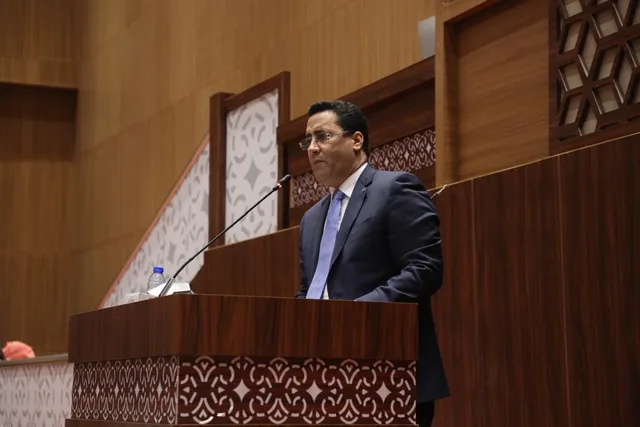
Ould Djay is due to answer MPs' comments and questions at the end of the debate, the Essahraa website reported this morning. On Saturday, the Prime Minister presented his programme at a session chaired by the Speaker of the National Assembly, Mohamed Bemba Meguett.
Three priorities for the next phase
In his speech, the Prime Minister set three priorities: supporting purchasing power, accelerating economic and agricultural development in the interior regions, and drawing up a national strategic development vision for 2060. He presented them as a continuation of existing government programmes, with improved implementation mechanisms, corrections of shortcomings and faster delivery, according to AMI.
On purchasing power, the programme provides for offsetting the impact of inflation on civil servants and civilian and military pensioners, especially those on low salaries and pensions, through wage and pension increases or temporary financial support; a call for urgent negotiations to raise the wages of workers covered by the collective agreement; temporarily covering a significant share of water and electricity bills for low-income households; and wider support for people with disabilities and the chronically ill, according to Essahraa.
On prices, Ould Djay announced a review of the fuel pricing mechanism and the continuation of price caps on wheat, rice, sugar and cooking oil, extended to meat, along with action against monopolies and speculation.
Development of the interior, the same source said, includes a special fund to encourage development financing in the regions, doubling funding for income-generating youth initiatives and incentives for investment in food sovereignty activities, as well as two urban development programmes for Nouakchott and Nouadhibou, a reform of waste collection and treatment, and urban plans for regional and district capitals that lack them.
On the 2060 vision, the Prime Minister said the government would launch "without delay" a process to draw it up and translate it into a national development plan setting out priorities, programmes and projects that can be implemented and monitored, through a "broad participatory approach" and with specialised international expertise, AMI reported. It is to be accompanied by an administrative reform setting objective criteria for promotion to administrative posts, separated from political considerations.
Ould Djay said part of these measures would take effect as soon as the government wins Parliament's confidence, and that he would present a detailed programme for other measures when he appears before the National Assembly at the end of January, according to Essahraa.
The record as presented by the government
In defending his programme, the Prime Minister cited the 2019-2026 record: average growth above 4%, external public debt down to below 40% of GDP in 2026, more than 350,000 households receiving cash transfers, and fuel and electricity price support exceeding 80 billion old ouguiyas in 2026, AMI reported.
On infrastructure, he cited around 7,600 classrooms built, 784 km of new roads and 997 km rebuilt, 1,340 new wells drilled since 2019, and ongoing electrification of more than 400 villages.
The 2027 budget in the background
The vote comes as the annexes to the 2027 draft finance bill, published by the Ministry of Finance on Sunday, set out in figures the framework for the government's work next year: revenue of around 152.11 billion MRU, expenditure and net lending of 145.91 billion, an overall surplus of 6.20 billion MRU (1% of GDP) and public investment of 66.10 billion. The economic and financial report projects subsidies and transfers falling from 23.80 to 17.84 billion MRU as the exceptional support measures taken in 2026 expire. It is, however, based on a budget framework dated 14 October, before the purchasing-power package was announced, and does not cost it.
The draft finance bill remains before the Finance Committee, with the Conference of Presidents scheduling a plenary session to debate and vote on it on Monday, 28 December 2026.
Party positions ahead of the session
In the majority, El Insaf party president Mohamed Ould Bilal Messoud urged the party's MPs to show discipline and unity at a meeting with the parliamentary group on Friday, 6 November, calling for all members of the group to attend and take part in the vote "to achieve broad consensus".
The Union for Democracy and Progress (UDP) said its MPs will vote in favour of the general policy statement, according to a party statement relayed by Essahraa on Sunday evening, reaffirming its commitment to the presidential majority and stressing that support for the government should translate into tangible results and better living conditions for citizens.
In the opposition, Tawassoul MP Isselkou Ould Bahah called on his opposition colleagues to boycott the debate in protest at the Conference of Presidents' refusal to give each MP three minutes to speak. In a text relayed by Cridem on Sunday evening, he described the extra half-minute sought by opposition MPs as a modest request given the scope of a statement covering more than thirty ministerial departments.
Tawassoul vice-president Sabhi Ould Weddady questioned on Sunday, in a statement to the press, how serious the announced separation of political and administrative posts was, saying it remains "a mere promise" unless it is turned into practical measures, and that the government's speech offered no tangible solutions on public services, purchasing power and inflation.
The Sawab party, for its part, criticised the government's talk of Mauritania in 2060, saying in a statement that putting forward long-term visions while living conditions and services deteriorate ignores citizens' urgent priorities, and calling for priority to be given to improving living conditions.
At the time of writing, AMI had published no official information on the proceedings of the session or the outcome of the vote, which is scheduled for today according to the National Assembly's agenda.