Madar (Nouakchott) - Members of Mauritania's National Assembly will debate and vote tomorrow, Monday, November 9, 2026, on the programme of Prime Minister Mokhtar Ould Djay's government, which he presented to them on Saturday morning, committing the government's responsibility under Article 42 of the Constitution. On Sunday the Ministry of Finance published the annexes to the initial 2027 finance bill, including the "Economic and Financial Report", which sets out in figures the framework for the government's action next year: revenue rising sharply on the back of mining, subsidies and transfers down by about 6 billion ouguiyas, and public investment of 66.1 billion.
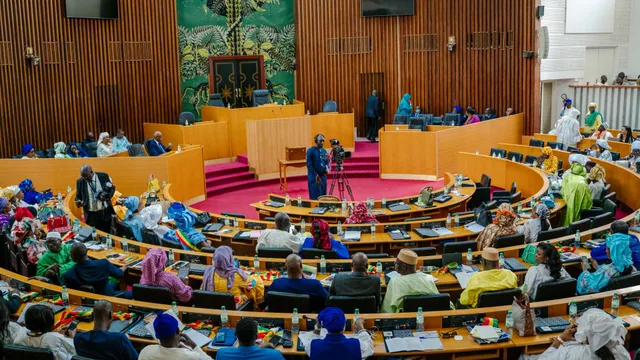
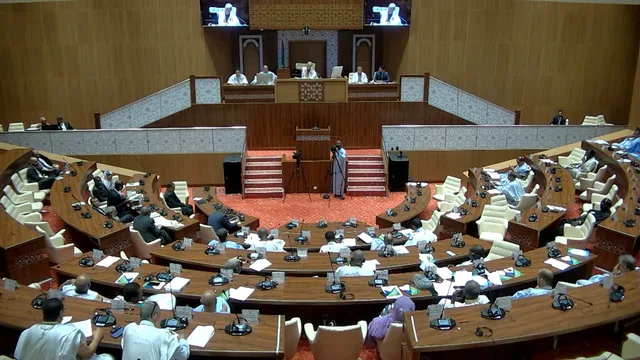
The National Assembly's Conference of Presidents decided at its meeting on Thursday, November 5, to schedule a plenary session at 10 a.m. on Monday to debate and vote on the Prime Minister's programme, and set the total debate time at 7 hours 20 minutes by a majority of those present, according to the Mauritanian News Agency (AMI). At the same meeting it referred the 2027 finance bill to the Finance Committee for in-depth study and scheduled a plenary session to debate and vote on it on Monday, December 28, 2026.
The budget in headline numbers
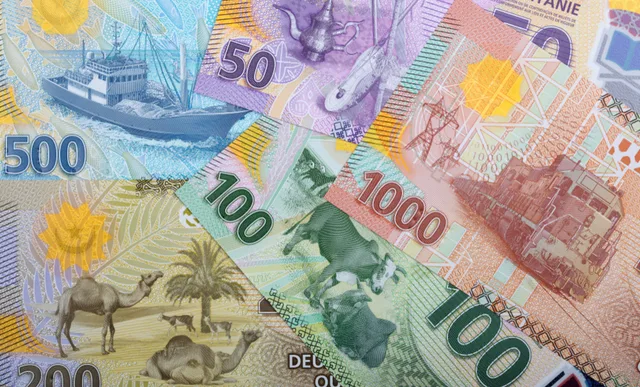
According to the Economic and Financial Report, annex 19 to the bill, total revenue would reach 152.11 billion MRU in 2027, up 9% on the amended 2026 finance law (139.52 billion), against 145.91 billion in spending and net lending (+4%). The overall budget balance would thus return to a surplus of 6.20 billion MRU, or 1% of GDP, after a deficit of 0.82 billion projected for 2026, figures presented by the finance minister on October 21 after the Council of Ministers approved the bill.
The bill assumes real growth of 5% in 2027 after 5.5% expected in 2026, average inflation of 3.3% after 7.5% this year and oil at $87.4 a barrel, with public debt falling from 36.9% of GDP in 2026 to 33.1% in 2027, according to the report's table of assumptions.
The report notes that the amended 2026 finance law significantly changed the balance of the initial law: revenue was raised from 128.79 to 139.52 billion MRU, spending from 132.18 to 140.34 billion, and subsidies and transfers went from 14 billion to 23.8 billion MRU.
Wages up, subsidies down
Current spending would edge down in 2027 to 79.81 billion MRU from 80.10 billion in 2026 (-0.4%), even as wages and salaries rise from 31.50 to 34.22 billion and goods and services to 13.51 billion, offset mainly by a fall in subsidies and transfers from 23.80 to 17.84 billion MRU, a cut of 5.96 billion. Current spending would be practically stabilised "as the exceptional support measures taken in 2026 expire", the report says. Interest on the debt is projected at 4.90 billion MRU.
On Saturday the Prime Minister told MPs that support for fuel and electricity prices had exceeded 80 billion old ouguiyas in 2026, and announced a package to protect purchasing power: a review of the fuel pricing mechanism, price caps on staple products extended to meat, support for civil servants' salaries and retirees' pensions, and covering part of the water and electricity bills of low-income households, AMI reported. The Economic and Financial Report is based on the budget framework dated October 14, before the package was announced, and does not put a figure on its cost.
66 billion for investment
Public investment, by contrast, would rise to 66.10 billion MRU (+9.7%), or 11% of GDP, 80% of it financed from domestic resources (52.91 billion), while external financing would rise 36.8% to 13.19 billion MRU. Total spending would fall from 25.1% of GDP in 2026 to 24.3% in 2027.
According to the overall medium-term expenditure framework, four ministries have the largest allocations in 2027: National Education (about 12.4 billion MRU), Health (about 6.9 billion), the Interior (about 6.1 billion) and Petroleum and Energy (about 3.9 billion).
The priority programme for universal access to essential services for local development (PPGASLD), worth 26.44 billion MRU over 2025-2027, enters its final year. Health (8.04 billion) and education (7.50 billion) receive more than half of it, ahead of access to electricity (4.04 billion) and drinking water (2.59 billion). It is due to build 6,115 classrooms and 104 hospitals and health centres, drill 939 boreholes and finance more than 2,300 small businesses run by young people, the report says. By September 30, 2026, however, 12.44 billion MRU had been committed, with physical progress of 50.77% against 71.76% of the time elapsed, and drinking water (13%) the least advanced component.
For public investment contracts, the report counts 104 active contracts with 64.48 billion MRU committed, 56.65% physical progress and 37.76% disbursed, while 127.15% of their deadlines have been used up. Phase I of the Nouakchott programme shows 87.82% physical progress for 148.82% of its time used.
Phase II of the Nouakchott city development programme includes 510 classrooms, emergency departments in four hospitals, three dialysis centres, 330 km of street lighting, 70 km of new urban roads and five bridges at the most congested junctions.
A fifth of revenue from mining
Tax revenue would reach 104.17 billion MRU (+11.2%), including 44.82 billion from taxes on goods and services, of which 20.62 billion in VAT on imports and 9.67 billion in domestic VAT, 36.97 billion from taxes on income and profits and 18.30 billion from taxes on international trade. Non-tax revenue would reach 39.52 billion MRU (+7.7%).
The extractive sector's weight would keep growing: its tax and non-tax revenue would rise from 26.44 billion MRU in 2026 to 32.13 billion in 2027, or 21.1% of total revenue against 19%. Grants, on the other hand, would fall to 4.77 billion MRU (-21.6%) and consist only of project grants, "with budget support disappearing from 2027", according to the report.
The report itself flags two assumptions that "deserve to be examined" in the light of 2026 budget execution: grants, and fisheries revenue, projected at more than 10 billion MRU in 2027 although only 3.23 billion was collected in the first eight months of this year. The natural resources report describes the expiry of the fisheries protocol with the European Union in November 2026 as "the main factor of uncertainty" for fishing revenue next year.
The fiscal rule, with no margin
2027 will be the first year of the new fiscal rule introduced by Organic Law No. 2026-019 of June 1, 2026, under which the primary deficit excluding extractive revenue may not exceed 3.5% of nominal GDP, to limit the budget's dependence on volatile mining and oil resources. That deficit stands at 21.03 billion MRU in the 2027 bill, or 3.5%: the scenario "reaches the ceiling set by the rule, with no significant margin", the report notes. The amended 2026 finance law projected a deficit of 22.18 billion MRU (about 4%), and the deficit calculated at the end of September 2026 had already reached 18.92 billion.
Exemptions and debt
The figures come after the tax expenditure report, also annexed to the bill, showed that tax exemptions cost the Treasury 17.6 billion MRU in 2025, a quarter of tax revenue, with 97% of the measures being full exemptions. The Economic and Financial Report announces a medium-term revenue strategy to be prepared before the end of December 2027, which would rationalise tax expenditure, modernise mining taxation and introduce a digitised property tax, as well as the general use of transaction value in customs before the end of September 2028.
On debt, another annex projects the state's outstanding financial debt at 219.3 billion MRU at the end of 2026, a quarter of it held by the Arab Fund for Economic and Social Development, ahead of the Saudi Fund for Development and the World Bank's International Development Association (IDA). In his speech, the Prime Minister said external public debt had been brought below 40% of GDP in 2026.
What reaches Parliament
The report acknowledges that the reforms are not yet reflected in assessments: the 2024 PEFA assessment of the public financial management system found its performance had stagnated since 2020. Of 31 indicators, 20 kept the same score, 4 improved and 7 declined, with weak budget reliability and "insufficient budget documentation sent to the National Assembly" among the findings. Since the 2026 finance law, the budget has been presented and voted by programme rather than by administration, and a budget orientation debate, a new stage in the adoption of finance laws, has yet to be introduced, the report says.
MPs vote on the government's programme tomorrow, Monday, while the draft 2027 budget remains before the Finance Committee until its plenary session on December 28.