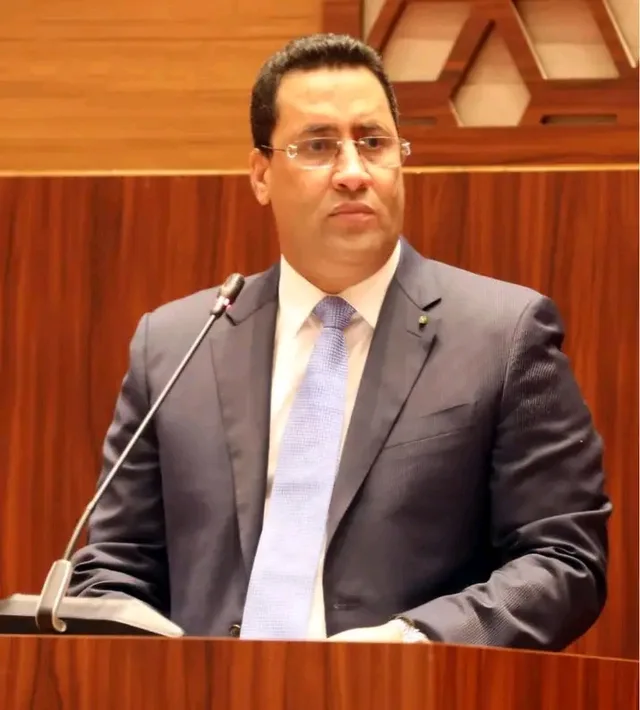
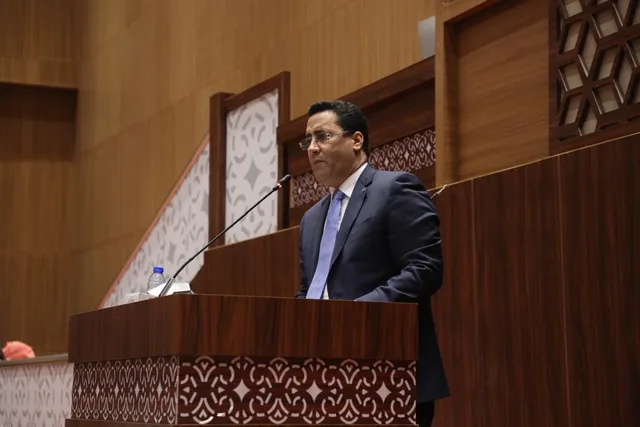
Madar (Nouakchott) - Prime Minister Mokhtar Ould Djay presented his government's general policy statement to the National Assembly on Saturday morning, November 7, 2026, saying the next phase would be defined by "improving citizens' purchasing power, creating economic and development momentum in the interior regions, and moving from short- and medium-term planning to a long-term strategic development vision".
Ould Djay presented the programme under Article 42 of the Constitution, committing the government's responsibility for it, ahead of the debate and vote by MPs on Monday, November 9, for which the Conference of Presidents has allotted seven hours and 20 minutes. Part of the measures will be implemented "immediately" once the government wins the Assembly's confidence, he said, with a detailed programme for the rest to be presented when he returns to Parliament at the end of January.
Commitments on the cost of living
According to the Prime Minister, the price index rose by a cumulative 7.3% between the end of February, when the war began, and the end of September 2026. President Mohamed Ould Cheikh El Ghazouani has instructed the government to plan on the assumption that the crisis lasts until mid-2027, and to prepare for it running longer.
On prices, the government pledged to review the current mechanism for setting liquid fuel and gas prices to limit the pass-through of international swings to consumers, and to keep the price caps on wheat, rice, sugar and cooking oil, with "strict deterrence" of any monopoly or speculation, while adding meat to the list of capped products.
To support purchasing power, Ould Djay announced compensation for the effect of inflation on civil servants and on civilian and military pensioners, especially those on modest salaries and pensions, through pay and pension increases or temporary financial support. The social partners will be invited to urgent negotiations to raise the wages of workers covered by the collective agreement in line with inflation since the start of the war.
The announced measures also include the state temporarily covering a significant share of water and electricity bills for low-income households, wider support for people with disabilities and the chronically ill, coordination with the Central Bank of Mauritania to curb inflation, fixed prices for livestock feed, sold at cost where needed, and a large programme of pastoral wells, as some areas recorded a rainfall deficit during the rainy season.
The announcements come after data from the National Agency for Statistics and Demographic and Economic Analysis (ANSADE) put annual inflation at 9.3% in September 2026, with food prices up 12.5% in a year.
Developing the interior and the cities
Under the second objective, the Prime Minister announced a dedicated economic programme to boost priority sectors in each region, notably agriculture, livestock and urban services. He spoke of a risk-sharing scheme to remove the bank-guarantee hurdle that keeps herders from accessing finance, and of a food sovereignty programme that includes rehabilitating all large dams and organising their use.
He pledged to double funding for youth initiatives in the interior regions, to grant financial and tax incentives for investment there, and to set up a special fund to promote development financing in the interior.
For the cities, the speech set out a "radical" overhaul of waste collection and treatment that goes beyond one-off clean-up campaigns, with clearly assigned responsibilities and updated penalties, urban plans for regional and district capitals that lack them, and two urban development programmes for Nouakchott and Nouadhibou focusing on sanitation and paving main roads.
A 2060 vision and administrative reform
Under the third objective, Ould Djay said the government would launch "without delay" the preparation of a national vision for Mauritania by 2060, a hundred years after independence, to be translated into a national development plan with measurable indicators. Economic and social actors, young people and experts will be involved "regardless of their political or intellectual affiliations or opinions", with the help of international expertise. The government will also support the planned national dialogue and the implementation of its outcomes, he said.
"How much time, how many resources and how much accumulated experience and knowledge has our country lost with every change of regime, and even of government and administrative team?" he asked.
On the civil service, he announced a new decree separating administrative posts, to be filled on the basis of seniority, experience, specialisation, competence and performance, from political posts to which the government keeps the power of appointment, as well as a continuing training programme for public servants involving the National School of Administration.
A record whose shortcomings the speech acknowledges
Reviewing the previous government's record, the Prime Minister said average growth exceeded 4% over 2019-2026, that external public debt fell below 40% of GDP in 2026, that more than 350,000 households received cash transfers for the first time, and that funds to subsidise fuel and electricity prices exceeded 80 billion old ouguiyas in 2026 alone.
The number of insured people rose from 496,000 in 2019 to more than 1.4 million in 2026, he said. Since 2019, some 7,600 classrooms and 1,340 wells have been built, along with 784 kilometres of new roads and 997 kilometres rebuilt, while work continues on 1,431 kilometres. Construction of the deep-water port in Nouadhibou will begin in January, he added.
Ould Djay acknowledged that efforts to improve the continuity of electricity supply "did not prevent the fire at the two stations", pledging to deal with its consequences and to fix structural problems at the Mauritanian Electricity Company (SOMELEC), taking into account the recommendations of the independent commission of inquiry. What has been achieved "remains human work that is not free of shortcomings, and may at times involve mistakes or misjudgements", he said.
The new government will continue the 2026 action plan of 228 activities that he presented to Parliament in January, he said.
Ahead of the vote
MPs will vote on Monday after a debate in which each member has two and a half minutes, under a decision of the Conference of Presidents that opposition MPs have criticised, according to the Al-Akhbar news agency. Tawassoul MP Ahmed Ould Mballa said the cut hampers parliamentary oversight, according to the Shems Maarif website.
For his part, El Insaf party leader Mohamed Ould Bilal Messoud urged the party's MPs on Friday evening to show discipline and unity and to ensure that every member of the parliamentary group attends the vote.