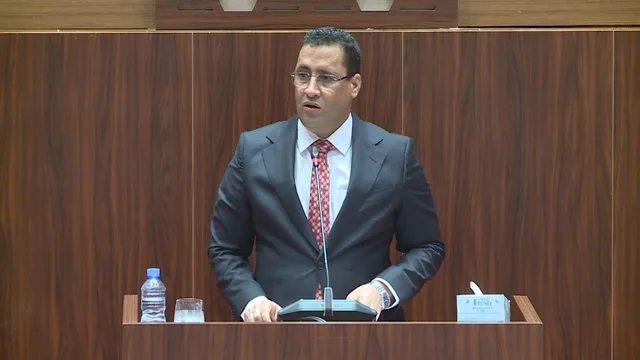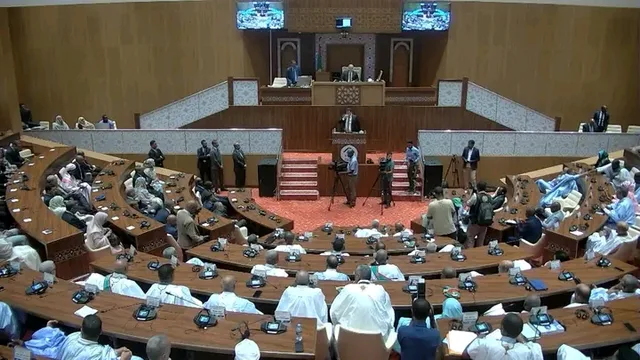
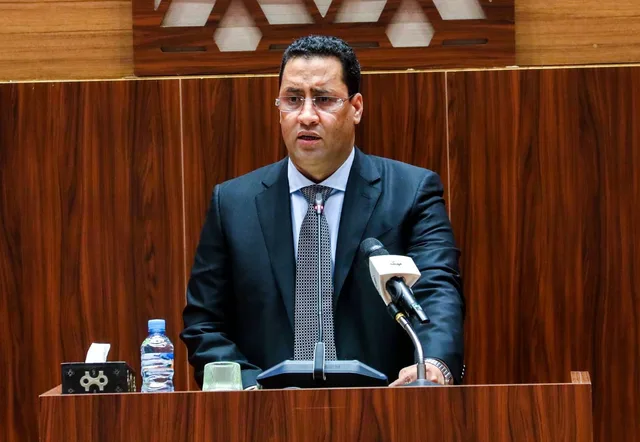
Madar (Nouakchott) - Prime Minister Mokhtar Ould Djay's government has won the confidence of the National Assembly after MPs adopted its general policy statement by 145 votes at the close of the public session held on Monday 9 November 2026, according to the results announced by Assembly Speaker Mohamed Bemba Meguett and published by the Mauritanian News Agency (AMI) overnight into Tuesday 10 November.
According to the official results, the National Assembly has 176 members, 167 of whom took part in the vote: 145 voted "yes", 21 "no" and one abstained. AMI did not publish a breakdown of the votes by parliamentary group.
The vote, whose result Madar reported as soon as it was announced, closes a constitutional process that began on Saturday 7 November when the Prime Minister presented his programme to MPs and engaged the government's responsibility, and continued on Monday at a session devoted to debating the programme before the vote.
What MPs raised
The "overwhelming majority" of MPs praised the programme's diagnosis of the challenges and its proposed remedies, AMI reported, while calling for faster delivery of stalled projects, for "responsibilities to be determined" for delays and failures in their execution, for food sovereignty to be placed high among government priorities, for the fight against corruption to continue and for swift solutions to problems in their constituencies.
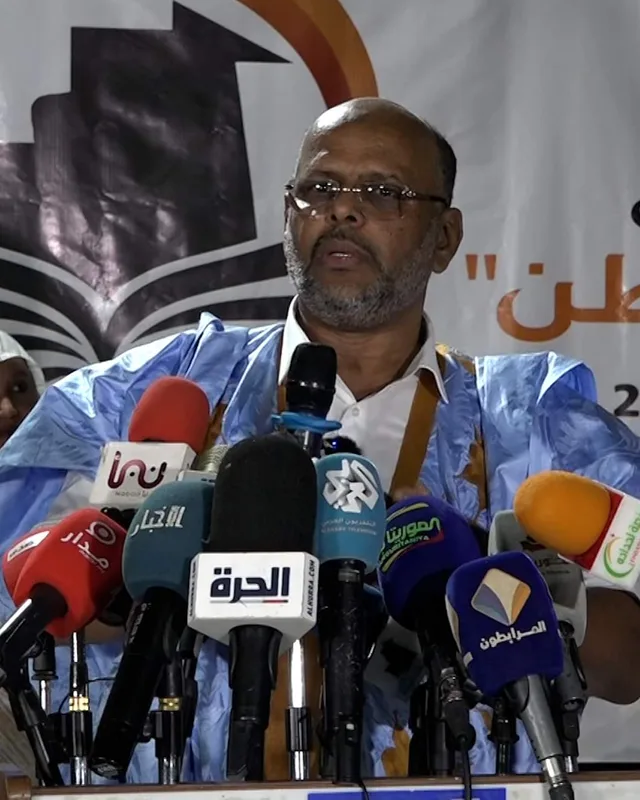
Before the session, the Union for Democracy and Progress (UDP) had announced that its MPs would vote for the statement, while Tawassoul MP Isselkou Ould Bahah had urged opposition MPs to boycott the debate in protest at the speaking time allotted to them. During the session, MP Biram Dah Abeid announced his resignation from parliament, saying he would devote himself to what he called the fight against corruption and disinformation.
The Prime Minister's replies: figures and priorities
Replying to some 110 MPs who took the floor, Ould Djay said the government was committed to respecting other views, "especially the opposition's", adding that MPs "did not question" the accuracy of the figures in the statement, that the disagreement was about putting them in context, and that presenting the record "does not mean ignoring the difficulties" some citizens still face, according to AMI.
On public finances, the Prime Minister said the state budget had risen from 541 billion ouguiyas in 2019 to 1,449 billion in the 2027 finance bill, an increase that "did not result from new taxes", nor from selling state assets or foreign grants. Allocations for transfers and social support rose from 57 to 178 billion ouguiyas, investment from 280 to 610 billion and wages from 156 to more than 340 billion, while debt service reached only 104 billion against 97 billion in 2019; 80% of the 2027 investment budget will be financed from the state's own resources, against 76% in 2019. The figures come against the backdrop of the 2027 finance bill annexes published by the Ministry of Finance before the session.
He added that the external debt-to-GDP ratio fell from 65.6% in 2019, excluding the Kuwaiti debt, to 39.9% in 2026, even though the stock rose from about 3.7 billion dollars to about 4.7 billion, and urged that these figures be read against the growth of the economy.
Fuel and prices
On fuel, Ould Djay said the state had committed about 202 billion additional ouguiyas in 2026 to keep the market supplied, with about 120 billion in additional allocations expected for 2027. He said a litre of diesel at November's international reference prices costs about 875.7 ouguiyas, with taxes and duties of about 267.3 ouguiyas, while it is sold to consumers at 621 ouguiyas.
He said the government had dropped the old diesel import mechanism based on intermediation and supply through the company "Addax" in favour of a system known as DAP, based on direct contracts with suppliers, in which international companies took part alongside Addax itself, and that it "does not intend to return to the previous mechanism". Storage capacity in Nouakchott rose from 60,000 tonnes by about 100,000 additional tonnes, with new facilities entering service this year. At the same session, the Prime Minister described corruption as the country's gravest challenge and defended the supply contract.
On staple goods, he said the government was ensuring their availability with "minimal and reasonable profit margins" without penalising traders, that the measures cover rice, wheat, maize and sugar, and that work was continuing on appropriate measures on meat prices.
Services: education, health, water and electricity
On education, the Prime Minister cited the construction of about 7,600 classrooms between 2019 and 2026 and the recruitment of 19,581 teachers, announcing that next year would be the last year of recruiting service providers in the sector. On health, he said health insurance now covers about 1.4 million beneficiaries, that the Tidjikja regional hospital would open soon, followed by Aleg and Aioun and then Akjoujt and Zouerate, and that 18 of the 28 health centres planned in Nouakchott were in service.
On water, he said output at the Idini plant had risen from about 45,000 cubic metres a day to between 100,000 and 105,000, that the Aftout Essahli expansion would raise its capacity from 125,000 to about 225,000 cubic metres a day, and that the Dhar project expansion is expected to be inaugurated at the end of December. He also said Nouakchott's sanitation project, costing 77 billion ouguiyas, is fully financed from state resources, with works to start in the Sebkha and Tevragh Zeina districts.
On electricity, the Prime Minister described the situation as "difficult", saying it "does not meet the required level" and that fixing it is a top priority. The first large power plant financed directly by the state, with a capacity of 76 megawatts and a cost of 44 billion ouguiyas, is now expected to be completed between January and March instead of the end of December, he said, alongside two plants under construction as public-private partnerships and the rehabilitation of three distribution substations in Nouakchott and the construction of three new ones, according to AMI.
Corruption, dialogue and term limits
On corruption, Ould Djay stressed the importance of publishing reports by the General State Inspectorate once procedures are complete and of respecting judicial independence, saying the government "cannot impose verdicts" or steer the courts towards acquitting or convicting anyone. He also reaffirmed the government's commitment to follow through on the outcomes of the national dialogue "and implement them in full".
On questions raised about presidential terms and the 2060 horizon, the Prime Minister said the government's position had been set out in the general policy statement and by President Mohamed Ould Cheikh El Ghazouani, recalling that the President had made clear at his press conference that any change on these issues "can only take place in accordance with the Constitution and the will of the people".
Next steps
Having won confidence, the government now moves to implementation: the Prime Minister had announced that part of the purchasing-power measures would take effect as soon as the government won Parliament's confidence, and that he would present a detailed programme for other measures when he appears before the National Assembly at the end of January. Before that, MPs will return to the budget in a plenary session scheduled for Monday 28 December 2026 to debate and vote on the 2027 finance bill.
Among the first reactions after the vote, the president of the Citizenship Front party, Mohamed Jemil Mansour, praised the record presented by the Prime Minister in a Facebook post, calling for "more achievements at a faster pace".