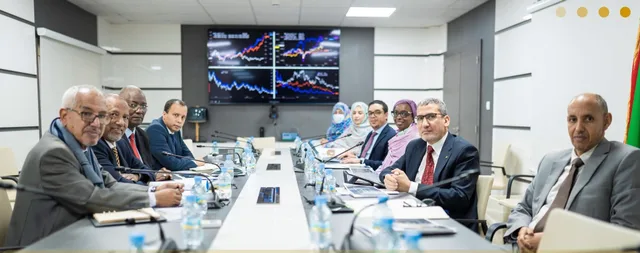
Madar (Nouakchott) - The Central Bank of Mauritania's Monetary Policy Council said accelerating inflation, which reached 9.3% in September, calls for tighter monetary conditions, warning that interest rates below inflation combined with excess liquidity at banks could weaken monetary policy and fuel price pressures, according to minutes of its meeting seen by Reuters and reported on Sunday, November 1, 2026, by the Sahara Medias website.
The council said the 6.75% policy rate implies a negative real rate of about 2.5%, which, together with high bank liquidity, could weaken policy transmission and encourage second-round inflation effects. Containing the pressures requires action on two fronts: interest rates and structural liquidity.
Inflation rose from 8.5% in July to 8.9% in August and 9.3% in September, with food contributing about 6.8 percentage points. The minutes said pressures had spread to non-perishable foods in core inflation, which have risen steadily since September 2025.
The council acknowledged that tightening would not directly address the supply shocks behind part of the price rise, but said it aims to limit their spread to the rest of the economy.
Free bank reserves stood at MRU 4.35 billion on October 27, more than four times the MRU 1 billion target, while open-market operations outstanding reached MRU 17 billion, including 12 billion in central bank certificates; the bank said it stepped up liquidity absorption in October. Before the meeting the policy rate was 6.75%, with the lending facility at 7% and the deposit facility at 2%.
The council forecast growth of 5.2% in 2026, up from 3.6% in 2025, driven by investment and non-extractive sectors, despite a third-quarter extractive slowdown, with iron ore output down about 19% and gold about 6% from the previous quarter. It warned that higher oil prices, with Brent at $114.62 a barrel, could raise the energy bill and transport costs.