Madar (Nouakchott) - The livestock breeders' union of Mauritania's Assaba region held its founding general assembly on Thursday, 5 November 2026, at the Assaba regional council building in Kiffa, under the supervision of the regional governor, Ahmedou Addahi Ekhtaira, according to the Mauritanian News Agency (AMI).
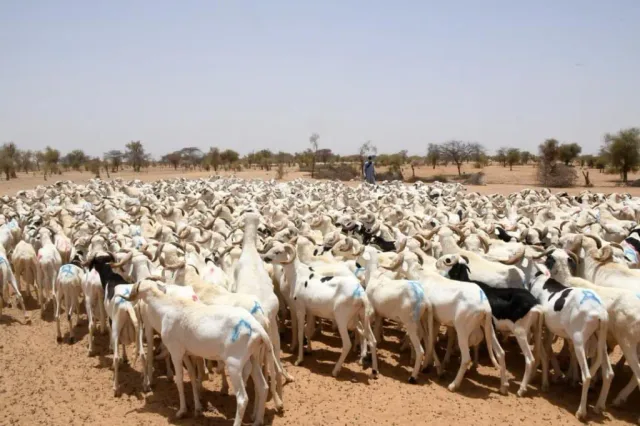
The union's president, El Khalef Ould Abdallahi, said the new body was ready to mobilise and organise herders and to help "supply regular quantities of raw milk to the Nkadi plant to fill the supply shortfall and ensure the continuity of its production". He said the partnership's success required joint efforts by herders, professional bodies, public authorities and partners.
The governor said the region was counting on the union to unite herders and organise the sector, describing agricultural and livestock development as "two complementary fields that cannot be separated", and called for stronger coordination between those involved.
The president of the Assaba regional council, Mohamed Mahmoud Ould Habib, described the region as "pastoral par excellence" and said the union was expected to defend herders' interests and help raise the value of the livestock sector.
Kiffa's deputy mayor, Yeslem Ould Biyane, stressed the importance of these efforts "under the current climatic conditions and weak rainfall", and their possible impact on pasture reserves and livestock production.
The meeting was attended by the vice-president of the National Livestock Federation, Sidi Ahmed El Heiba, the prefect of Kiffa district, the regional delegate of the Ministry of Livestock Development and the heads of the region's security services.
The union was founded a week after a consultation day in Kiffa on growing green fodder, at which the Assaba governor warned of the effects of the rain shortfall on pastures and livestock.