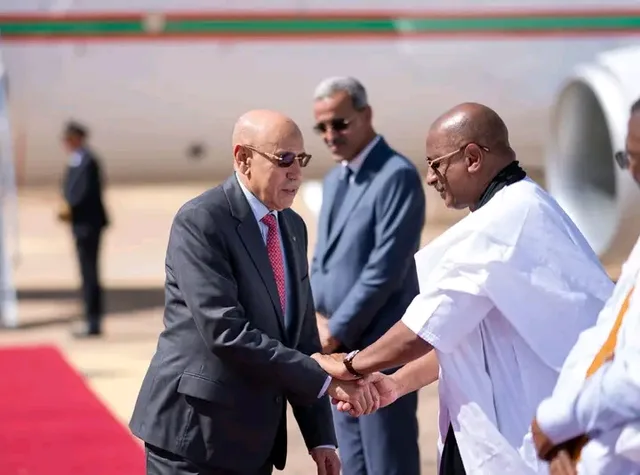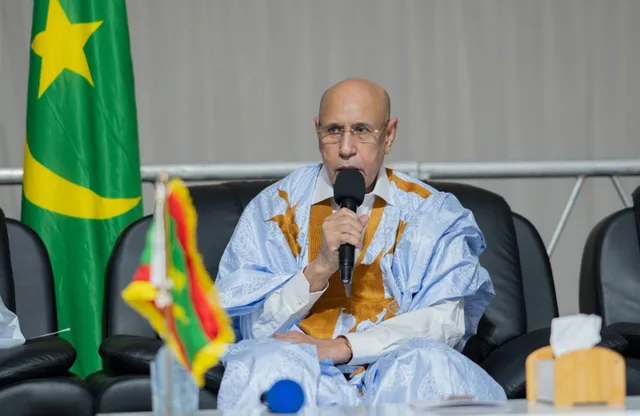
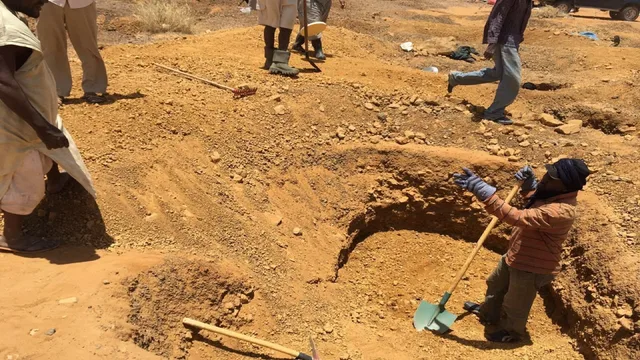
Madar (Selibaby) - Guidimakha region joined Mauritania's industrial gold map on Monday, 23 November 2026, as President Mohamed Ould Cheikh El Ghazouani, who travelled to Selibaby that morning, launched actual production at the Ghabou gold mine, the first of the presidential inaugurations marking the 66th anniversary of independence, according to the Mauritanian News Agency (AMI). The regional governor (wali), Dahmane Ould Beyrouk, called it "an important step towards Guidimakha joining the ranks of the country's mining regions".
The mine is operated by the Chinese company "Shunda Mining" in partnership with the Mauritanian State, represented by the National Agency for Geological Research and Mineral Heritage, with an initial investment of about $230 million, estimated annual turnover of $117 million and an operating life of about 19.5 years, AMI said.
The mine in figures
Located about 25 km from the town of Ghabou, according to AMI and the governor, the mine has estimated reserves of 1.3 million ounces of gold, plus possible resources of about 3 million ounces. Output is targeted at around 31,000 ounces in the first year and 61,000 in the second, and later expansion plans mention 500,000 ounces a year, with no timetable given in the official account.
For comparison, the Tasiast mine in Inchiri, which the mines ministry says accounts for 44% of state mining revenue, produced about 503,429 ounces in 2025, down 19.1%, according to the finance ministry's annual report on the implementation of natural-resource agreements. By simple arithmetic, Ghabou's first-year target equals about 6% of Tasiast's 2025 output and about 12% in its second year, while the announced 500,000-ounce ceiling is close to Tasiast's current level. Canada's Kinross, which owns Tasiast, puts its reserves at about 4.4 million gold-equivalent ounces, with operations expected to run until 2033.
Gold and the public finances
Ghabou comes on stream as the weight of extractive industries grows. According to the summary of the EITI 2025 report, presented in Aleg on 22 November, the sector accounted for about 19.77% of GDP and 69.50% of exports, with revenue of about 26.95 billion MRU, nearly a quarter of state budget revenue, AMI reported.
In the 2027 draft budget, the government expects 32.13 billion MRU in mining revenue, up 69.2% on the 2026 finance law, relying on the effect of higher gold prices on gold companies' corporate tax. Tasiast alone paid the government $266.1 million in 2025 in royalties, taxes and fees, according to Kinross's report.
1,200 jobs and the migration bet
According to the official account, the mine will create about 1,200 jobs, which the governor described as "permanent" in the first phase. The president of Guidimakha region, Issa Coulibaly, said the jobs would give the region's young people breathing space and could help "reduce the motivations to emigrate", while the mayor of Selibaby, Oumar Hamady Ba, said jobs for more than a thousand young people from Guidimakha were a major gain in a region that, he said, has lost a number of its sons and daughters to irregular migration, they told AMI.
Again for comparison, Kinross says Tasiast supported more than 1,700 direct local jobs in 2025, while the mines ministry speaks of more than 4,000 direct and indirect jobs. In August, the ministry issued a circular requiring mining companies to give priority to Mauritanian workers and suppliers, making the use of foreign firms an exception subject to prior approval.
A region waiting for its road and airport
The mine lies in a region bordering Mali and Senegal, with more than 300,000 inhabitants according to the governor, who reported "notable progress" on the Kankossa-Selibaby-Ghabou road and announced the upcoming opening of Selibaby airport after its rehabilitation. A review presented in Selibaby on 30 October showed the first phase of the emergency programme in the region at 54% completion, with 115 of 215 interventions finished.
What has not yet been announced
Official accounts have not yet disclosed the State's stake in the operating company, the expected revenue for the treasury in taxes and royalties, the timetable for reaching 500,000 ounces a year, how many of the 1,200 jobs will go to local residents, or the details of the project's environmental impact study.