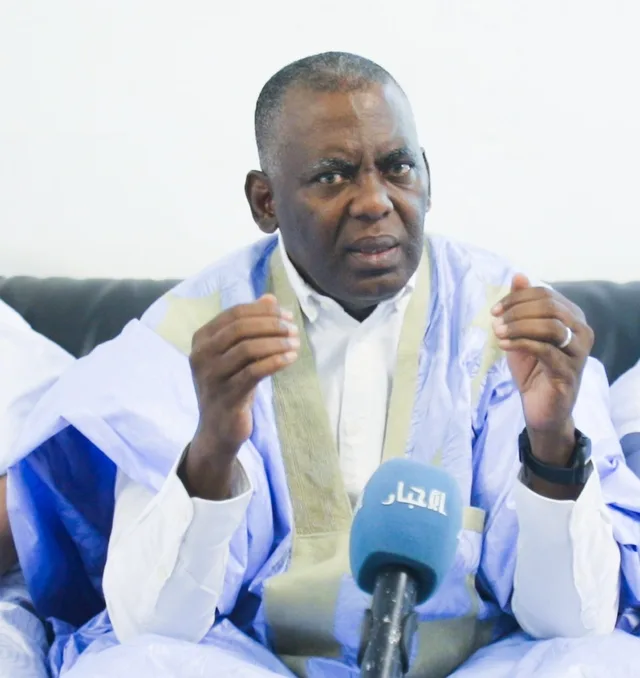
MP Biram Dah Abeid has described the arrest of journalist Hanafi Ould Dahah over a Facebook post as unjustifiable. He said it continued a long series of arrests of journalists, bloggers and activists and reflected the steady erosion of public freedoms in Mauritania.
In a letter received by Madar, Biram said the authorities were confusing criticism with insult and the expression of an opinion with a crime. Democracy could not be built in a climate of fear, he argued, or flourish when citizens, journalists and bloggers had to weigh every word before speaking or writing it for fear of reprisals.
He stressed that freedom of opinion, expression and the press was not a favour the authorities could grant or withdraw at will, but a fundamental right that the state was responsible for protecting.
Biram described the current president as facing more criticism, ridicule and smear campaigns, in both frequency and intensity, than any of his predecessors in Mauritania's political history.
He argued that this phenomenon should neither be ignored nor its significance dismissed. It should prompt the president to examine seriously the underlying causes of this growing rejection and what the sustained hostility revealed about problems in the relationship between the authorities and citizens, he said.
Instead of prompting the authorities to reassess their choices and policies, he said, criticism had been followed by successive arrests and prosecutions of bloggers, journalists and activists over their posts or positions since President Mohamed Ould Cheikh El Ghazouani came to power.
Biram linked criticism of the president to the law protecting national symbols. He argued that the law had helped entrench restrictions on freedoms and deepen tensions between activists and the authorities.
Criminalising expressions deemed offensive to the president or national symbols fostered fear and self-censorship, he said. It reinforced a widespread feeling among citizens that they were being silenced whenever they dared to criticise the authorities' performance or question their policies.
He described these restrictions as increasingly arbitrary against a backdrop of widely criticised government policies whose results, in his view, fell short of Mauritanians' expectations.
When promises were not fulfilled, achievements were inadequate and living conditions failed to improve, it was natural for citizens to express anger, journalists to question government choices and bloggers to convey public frustration, he said.
Popular discontent was not a crime and a people's suffering did not threaten the state, he added. Imprisoning those who exposed or expressed it could not silence that feeling and would only intensify it, he argued.
A responsible government answered criticism with explanations and by correcting failed policies, rather than through repression, he said.
Biram said he had repeatedly condemned prosecutions and arrests since the launch of a media and security campaign against some bloggers living abroad and what he described as the accompanying arrests of their relatives. He called for the circumstances of all arrests in the case to be clarified and for those concerned to have their rights guaranteed.
He said he had faced insults, harsh criticism, accusations, falsehoods and defamatory campaigns throughout his political career, targeting not only his public life but also his private life.
Despite that, he said, he had never considered taking their authors to court on every occasion. Political life inherently involved excesses and verbal confrontations that could not be separated from freedom of expression, he argued.
If an ordinary political figure could bear such treatment, the head of state should be even more willing and able to do so, he said.
Biram also accused the regime of sometimes mobilising its security, political and media arms to smear and demonise its opponents, particularly him. He said these campaigns relied on falsehoods, deception and the manipulation of public opinion.
He said he had never sought to respond in kind or pursue their promoters through the courts. Although he regarded the practices as defamatory and false, he placed them within political competition and the struggle to influence public opinion. They should not become a pretext for silencing critics or sending them to prison, he argued.
Addressing the president, Biram said the office required open-mindedness, tolerance, self-restraint and the ability to endure criticism, even when it was unfair, excessive or hurtful.
The head of state was the country's highest authority, not a party to a political argument, he added. The president should not engage on his opponents' terms or leave the impression that the slightest inappropriate remark could unsettle him or send its author to jail, he said.
The dignity of the presidency deserved protection, Biram said, but that did not mean shielding it from criticism or giving any authority a licence to criminalise every expression it disliked.
Acts that might constitute crimes should be assessed under the law and its judicial safeguards for suspects and defendants, he added, rather than through intimidation, the venting of anger or humiliation before an investigation and a court ruling.
He said this would reflect a head of state conscious of the dignity of his office and confident in the institutions he embodied.
Biram stressed that silencing critics did not strengthen the state's authority. It weakened it when citizens came to believe that the authorities could no longer tolerate differences or accept scrutiny, he argued.
He concluded that Mauritania needed authorities open to debate, protective of journalists and respectful of public freedoms. A climate in which a satirical Facebook post could land its author in jail was neither needed nor worthy of the country, he said.
The president should not fear his people's voice, Biram said. Listening to it, even when it was shocking or painful, would enhance his standing. Rising above political disputes meant accepting criticism without losing dignity, not forcing others into silence in the name of protecting national symbols, he added.