Madar (Bamako) - A humanitarian and regional crisis has been widening for nearly a week since Guinean authorities banned uncontrolled gold mining in the Siguiri region in the country's north-east: thousands of foreign miners, notably from Burkina Faso and Mali, have left the sites for the Malian border, where Mali's Prime Minister's office has reported more than 40,000 people registered at Kouremale, calling the situation a "real humanitarian catastrophe". On Saturday, November 7, 2026, Bamako and Ouagadougou were still moving return convoys, while Conakry stood by its decision.
Conakry's decision: a total ban and a permanent deployment
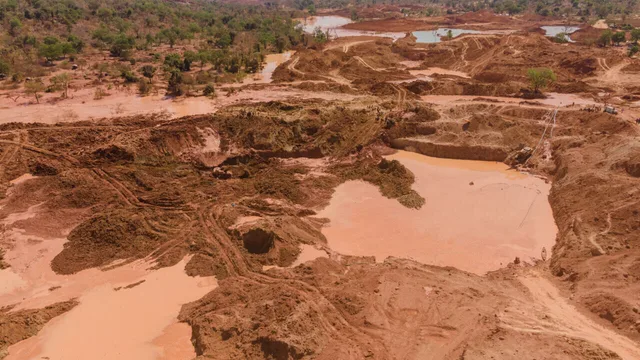
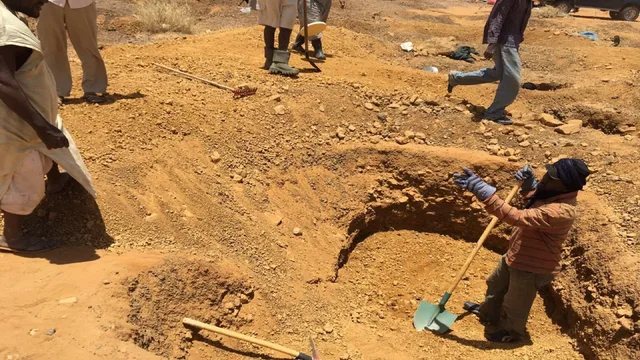
The Guinean government had announced a total ban on uncontrolled gold mining in the Siguiri administrative region in a joint statement signed by five ministers and read on state television on November 2, after "inspection and evaluation missions" which it said had established "an alarming deterioration of the environment", according to BBC Afrique.
The statement listed the damage: soil, farmland and vegetation destroyed by heavy machinery, pollution and silting of the Niger and Tinkisso rivers and their tributaries, a wetland of international importance listed under the Ramsar Convention, and the use of explosives, mercury and cyanide.
It provided for a "permanent deployment" of defence and security forces in the region, combining the army, gendarmerie, police, customs and nature conservation officers, checkpoints on roads and waterways to stop heavy machinery, dredges, explosives and chemicals from being brought in, and checks on the identity and residence status of people on the sites. "Foreigners in an irregular situation will be subject to the procedures provided for by law", it said.
The following day, President Mamadi Doumbouya signed a decree permanently striking off 22 civilian and military territorial administrators posted in the Siguiri region from the civil service and the defence and security forces, accusing them of facilitating clandestine gold mining, according to the text read on state television by presidential spokesman General Amara Camara. A total of 479 neighbourhood and district heads in the region were also dismissed. On Saturday, the Africaguinee news site reported that the 22 former officials had been remanded in custody on charges including bribery of public officials, illicit enrichment, money laundering, complicity in environmental damage and water pollution.
Conakry: solidarity does not justify destroying resources
Guinean Foreign Minister Morissanda Kouyate defended his country's position before diplomats accredited in Conakry on Thursday, November 5, denouncing the effects of clandestine mining, from cyanide discharges and deforestation to polluted waterways and dead animals, according to the Guineenews website.
The minister listed the nationalities of those arrested in connection with the activity, including Malians, Burkinabe, Ivorians, Togolese, Ghanaians, Nigerians, Beninese, Vietnamese, Indians, Sierra Leoneans and Cameroonians, several of whom are being prosecuted for illegal mining, environmental damage, working without authorisation and human trafficking.
Kouyate said that, on the head of state's instructions, the authorities had handed over detained people to their countries' consular and diplomatic representatives, including Malians in July 2026. But with clandestine mining resuming a few months after those operations, he warned that African solidarity cannot justify the destruction of Guinea's natural resources, urging partner countries to make their nationals respect the law and diplomats to rely on "facts observed on the ground" rather than on social media.
Ouagadougou: protest, then a call for calm
For his part, Burkina Faso's Security Minister Mahamadou Sana called the operation "deeply deplorable and regrettable", telling the BBC that "in no case were the Malian or Burkinabe authorities informed in advance". He reported injuries, "sometimes even gunshot wounds", which "suggests that our compatriots suffered cruel, inhuman and degrading treatment".
A few days later, Family and Solidarity Minister Passowende Pelagie Kabre called for calm and rejected calls for reprisals against the Guinean community, putting the number of returnees at about 50,000 pending figures from biometric registration, in an interview broadcast by Burkina Faso's national television.
Mali: the corridor and first stop
As early as Tuesday, November 3, Mali's crisis coordination and management centre (CECOGEC) reported a "large influx" of people of various nationalities at the border with Guinea heading towards Bamako, and the Malian government set up a reception and return plan, before more than 8,000 people were registered at Kouremale by November 2, according to the mayor.
Malian Prime Minister Major General Abdoulaye Maiga received a Burkinabe delegation led by Security Minister Mahamadou Sana and the solidarity minister on Wednesday, November 4. He stressed "the confederal logic that makes Burkinabe citizens Malian citizens in the name of the AES", called on the Alliance of Sahel States to mobilise to find "home-grown solutions" and said that "human solidarity knows no borders", according to a statement from his office.
After a meeting of the interministerial committee for crisis and disaster management on Thursday, November 5, the Prime Minister visited the Mamarybougou and Ouenzenbougou sites near Bamako. A meeting then recommended contacting the Guinean authorities "to understand what happened" and gathering those expelled at a single site.
On Saturday, the Prime Minister convened another emergency meeting of the crisis committee, according to the Malijet news site, which reported that a first convoy of 47 buses had reached Burkina Faso, that about 50 trucks were waiting to leave and that some 100 trucks had been chartered on Saturday, in addition to 74 trucks and 21 buses already mobilised for about 15,000 people expected.
According to the same source, the head of government ordered that those expelled be accommodated directly at the border in Kouremale to avoid overcrowding the capital, and that Malian nationals among them be precisely identified. The CECOGEC will publish a daily bulletin and a field visit is planned for Sunday.
Mali's National Human Rights Commission (CNDH) had expressed concern in a statement dated November 4 about the arrival of large numbers of migrants since November 3. It reminded the state of its obligations to provide humanitarian assistance and drew attention to the vulnerability of children and young people, calling for closer monitoring to prevent their recruitment or exploitation, while commending the government's measures, according to Malijet.
From Bamako to Bobo-Dioulasso
In Burkina Faso, the government said on Saturday that the first return convoy, 48 coaches carrying 3,400 people, arrived from Mali at around 9 p.m. on Friday, November 6, at the Bobo-Dioulasso multi-sports stadium, where it was received by a government delegation mandated by President Ibrahim Traore, including the family and solidarity minister and the ministers of higher education, sports and youth, secondary education and primary education.
Reception involves a security check, a health check to treat the sick and injured, and then psychosocial support, the government said. "Minors will be kept, but young adults will be registered and each will be able to rejoin their family", the solidarity minister said. The government is offering to return minors to school, vocational training for those who want it and university places for baccalaureate holders.
Authorities in the Kadiogo region had registered 3,533 returnees by November 5 and set up a reception plan, while Burkina Faso's Council of Ministers approved on the same day the creation of a state company, "Faso SANU", to regulate the operation of illegal gold-mining sites.
The AES at the forefront
The crisis also featured in the joint communique on Malian President Assimi Goita's visit to Ouagadougou on Thursday, November 5, in which President Traore, the current chair of the AES, thanked Mali for welcoming Burkinabe nationals turned back from Guinea. The announced figures still differ, between more than 40,000 registered at Kouremale according to Bamako and about 50,000 according to Ouagadougou's estimate, pending the biometric registration that is expected to provide consolidated data.