Madar (International) - Iran's Supreme Leader Mojtaba Khamenei said on Wednesday, November 4, 2026, that anyone expecting a shift in United States policy towards his country is "seriously mistaken", hours after midterm elections dealt a blow to President Donald Trump, Al Jazeera English reported, citing AFP.
"Those who still harbour even the slightest hope that the behaviour of the hegemonic system might change through partisan or factional shifts, or who imagine that making concessions to the United States can dissuade it from hostility towards the Iranian nation, are seriously mistaken," Khamenei said in a written message published in his name.
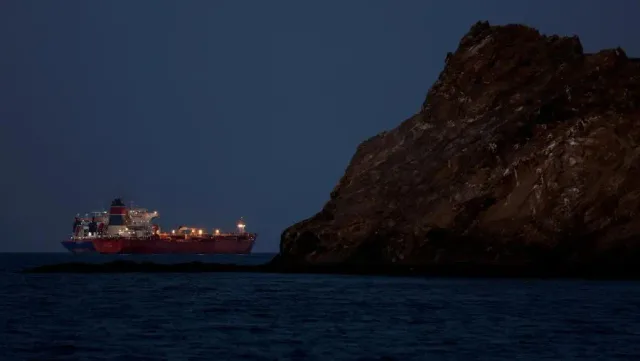
He said Iran's control of the Strait of Hormuz had shattered the "myth of America's invincibility" and warned: "In the event of repeated transgression, it will take on much wider dimensions." The statement came on the anniversary of the 1979 seizure of the US embassy in Tehran. Khamenei has not appeared publicly since his father and predecessor, Ali Khamenei, was killed in a US-Israeli attack on his office in February, according to the same source.
Parliament Speaker and chief negotiator with Washington Mohammad Bagher Ghalibaf wrote on X that Americans "said NO TO WAR, and we endorse this message". Mohammad Mokhber, an adviser and assistant to the supreme leader, said Trump had been "slapped in the face by his own people" and that "the true winner in this arena was Iran, which transferred the cost of the war into the United States".
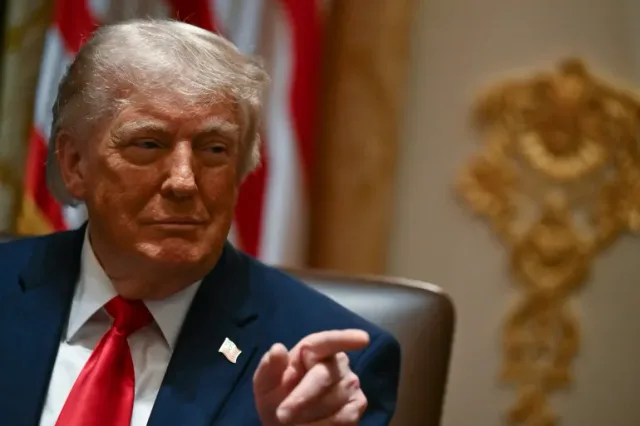
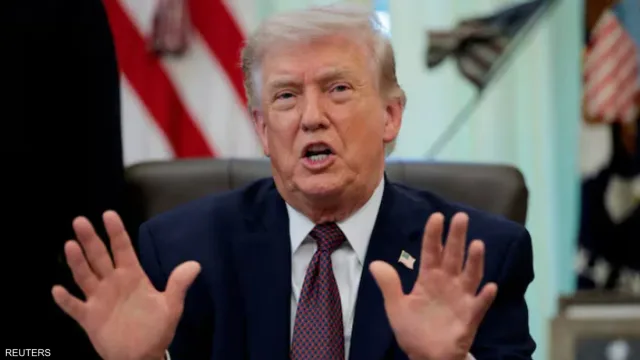
Trump has acknowledged that the war on Iran, which began in February, likely affected his Republican Party's poor showing, but told Fox News on Tuesday: "I don't think it's the war. I think it's the gasoline prices." He said some were pushing for a "heavy hit", and later told the Financial Times: "We're locked and loaded if we need to go, but there may be no reason for it."
Hamidreza Moghadamfar, an adviser to the commander-in-chief of the Islamic Revolutionary Guard Corps, told a rally in Bandar Abbas that Iran would hit targets beyond US bases if Gulf states allowed Washington to launch attacks from their territory, naming the United Arab Emirates and Bahrain.