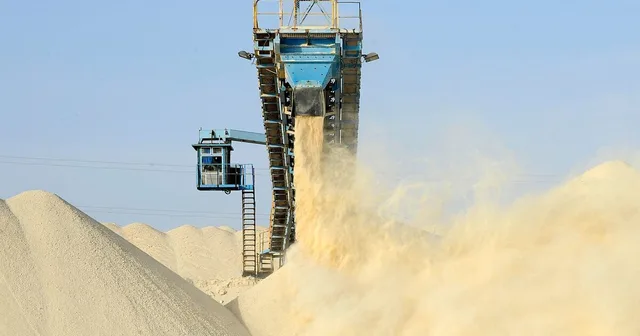
Morocco's OCP is holding talks with local and foreign investors about a potential equity investment in its new Mzinda fertiliser complex, which is scheduled to begin production in 2027, according to a Bloomberg report carried by Business Insider Africa on Thursday, October 15.
The report cited a person familiar with the discussions as saying that higher sulphur prices had slowed the project's progress and increased the need for funding to pay contractors and suppliers. The information concerns investment talks, not a completed deal or an announced sale of a specified stake.
According to the same report, OCP is also considering bringing investors into Specialty Products & Solutions (SPS), whose products include purified phosphoric acid used in batteries, and into its Uranext subsidiary, which focuses on extracting uranium from phosphates.
The talks come as the group's financial results have weakened. Its first-half 2026 accounts, published on September 29 and filed with Morocco's capital markets authority, show a consolidated net loss of 2.546 billion dirhams, compared with a profit of 8.611 billion dirhams a year earlier. The loss attributable to the group was 2.837 billion dirhams.
Revenue fell to 48.372 billion dirhams from 52.166 billion in the first half of 2025. Earnings before interest, taxes, depreciation and amortisation declined to 13.307 billion dirhams, with a margin of 28%, down from 36% a year earlier.
In its earnings statement, OCP said soaring sulphur prices and higher ammonia costs had increased production expenses. Farmers' affordability constraints limited how much of those increases could be passed through to fertiliser prices. The group described market conditions shaped by Middle East tensions, supply constraints and weaker demand in several markets.
OCP responded by bringing forward some maintenance work to the second quarter and increasing the share of triple superphosphate (TSP), which requires less sulphur and no ammonia. TSP accounted for 35% of its fertiliser export volumes in the first half, compared with 26% a year earlier.
Capital expenditure totalled 16.067 billion dirhams in the first six months. Net financial debt stood at 115.466 billion dirhams at the end of June, down from 119.118 billion at the end of 2025, while cash and cash equivalents amounted to 32.692 billion dirhams.