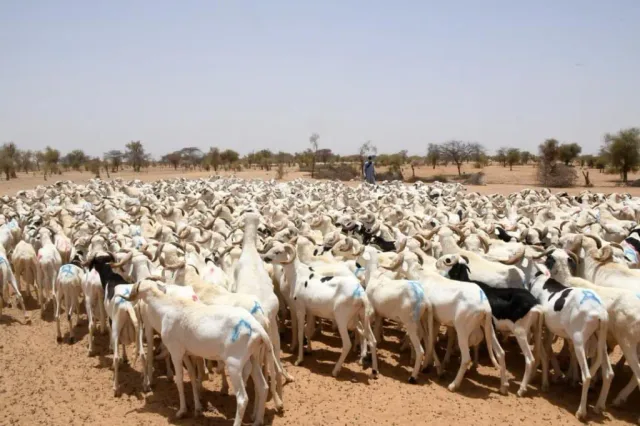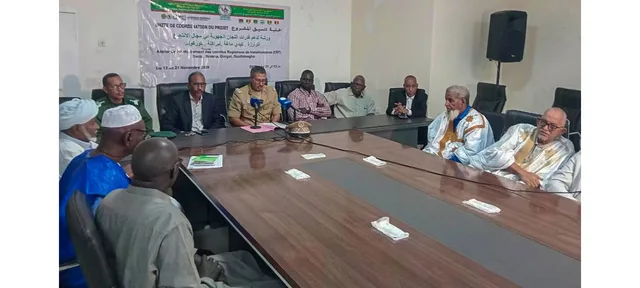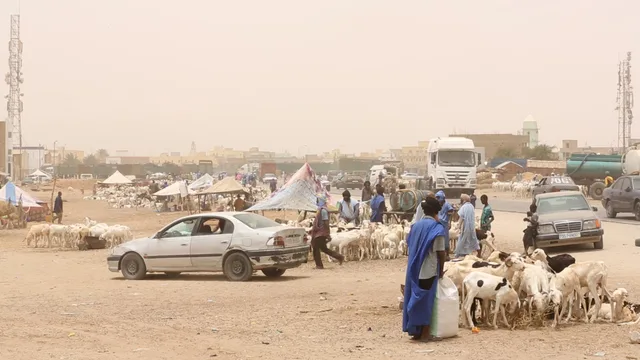
Madar (Nouakchott) - A training course on protecting fodder crops opened on Friday, 20 November 2026, at the Lekat centre for the control of grain-eating birds in Trarza region, the latest in a series of official moves in recent weeks to protect livestock and pastures after a rainy season in which, the government says, "rainfall declined", according to the Mauritanian News Agency (AMI).
The moves include a national livestock vaccination campaign, a meeting of the ministerial committee monitoring the pastoral situation chaired by the Prime Minister, workshops on cross-border transhumance and regional fodder-growing initiatives. Details of the government interventions expected to address the shortage of pasture have not yet been announced.
An uneven rainy season
In a bulletin issued on 10 September 2026, the National Meteorological Office said satellite data for 2 June to 2 September showed totals of 300 to 500 mm in the far south of the two Hodhs, Assaba and Guidimakha, but a shortfall of 100 to 200 mm in parts of southern Hodh Chargui and Guidimakha, "pockets of deficit" in several farming and grazing areas, and under 75 mm in parts of the north. The office then described the overall indicators as "encouraging" despite the shortfall.
Regionally, the executive secretary of CILSS, Abdoulaye Mohamadou, warned in Dakar on 20 October that the 2026 farming and grazing season was "worrying in terms of both food and fodder", according to the Senegalese Press Agency. On 29 October, the governor (wali) of Assaba spoke of a "sensitive situation" given signs of a rain shortfall and a possible decline in pastures, at a consultation day on expanding fodder crops where volunteer farmers offered more than 100 hectares.
What the government has decided
On 13 November, Prime Minister Mokhtar Ould Djay chaired the ministerial committee monitoring the pastoral situation, attended by regional governors and representatives of the herders' federation and pastoral associations, on the instructions of President Mohamed Ould Cheikh El Ghazouani, to ease the effects of lower rainfall on herders and the population at large, AMI reported. The committee heard a presentation on the state of pastures and on interventions in similar years, and the Prime Minister ordered measures to protect pastures, closer coordination and vigilance.
A week earlier, on 7 November, the government's general policy statement to the National Assembly pledged to "stabilise fodder prices, buy sufficient quantities and sell them at cost when needed", to launch "a broad programme of pastoral well drilling in areas that need it", to add meat to the price-cap mechanism, and to design a risk-sharing scheme so that bank guarantees are no longer the only condition for herders to obtain financing.
13.5 million head to vaccinate
On 12 November, the Minister of Livestock Development launched the 2026-2027 national vaccination campaign from the village of Chinguetti in Bouhdida commune (Aleg department). It targets 10 million sheep and goats against peste des petits ruminants and 3.5 million cattle against contagious bovine pleuropneumonia, with 66 veterinary teams, marking of vaccinated animals and support from partners led by the World Bank.
The minister said the 2024 census put the national herd at nearly 30 million head, and that livestock accounts for about 10% of GDP, around 68% of the rural economy and more than 60% of rural jobs.
In Assaba, the regional campaign began on 19 November at Agreij El Malih in N'Waemlein commune, targeting 1.6 million sheep and 480,000 cattle with eight field teams. Governor Ahmedou Adahi Khtaira said last year's campaign exceeded its target by 30%, while the regional livestock delegate said the goal is to eradicate peste des petits ruminants by 2030.
Organising cross-border transhumance
From 15 to 18 November, the World Bank-funded Regional Sahel Pastoralism Support Project (PRAPS), run under the livestock ministry, held workshops in Rosso, Aleg, Kaedi and Selibaby to strengthen the regional committees that monitor and secure transhumance in Trarza, Brakna, Gorgol and Guidimakha, which work with their counterparts in border regions of Mali and Senegal.
The secretary general of the National Group of Pastoral Associations, Salem Ould Ahmed El Hadj, said the committees resulted from negotiations between Mauritania and its neighbours since 2008, and that regulatory decisions are being prepared to set them up in Hodh El Gharbi, Brakna, Trarza and Guidimakha. The governor of Trarza signed decision No. 0027 of 17 April 2025 establishing his region's committee, according to AMI.
Protecting fodder
The week-long Lekat course is organised by the plant protection directorate of the Ministry of Agriculture and Food Sovereignty, with World Bank support under PRAPS 2. It brings together 40 agricultural technicians and representatives of farmers' organisations from farming and grazing regions, and covers pest monitoring and control, especially rodents, integrated pest management and cutting excessive pesticide use, for crops such as fodder sorghum, fodder cowpea and berseem clover. It follows a similar session last week.
Plant protection director Sidi Mohamed El Ghassem said the courses aim "to strengthen field monitoring and step up preventive action against crop pests". In Guidimakha, the national mechanism for preventing and responding to food and nutrition crises held a workshop on 10 November, backed by the UN Central Emergency Response Fund and coordinated with FAO, to assess anticipatory action against drought, which provided farmers in the region with equipment, seeds and cash support.
What has not yet been announced
Official accounts have not yet published a national estimate of the pasture shortfall, the quantity or cost of the fodder the state will buy, the number of pastoral wells planned or their timetable, or the conclusions of the assessment presented to the ministerial committee.