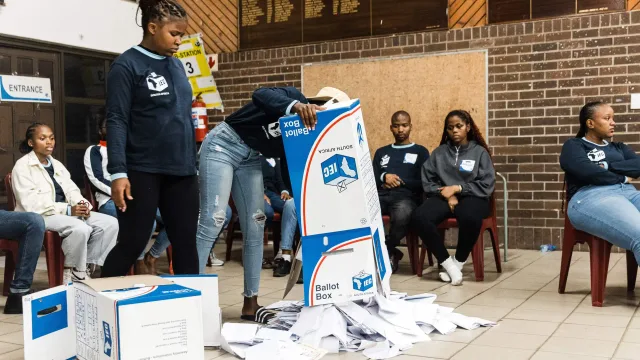
Madar (Johannesburg) - South Africans voted on Wednesday, November 4, 2026, in closely watched local elections, with parties battling for control of major cities in a contest expected to offer a measure of the national mood before the next general election, AFP reported via Africanews.
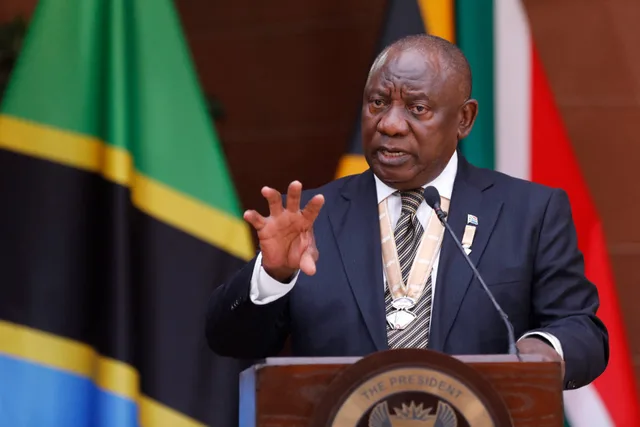
The elections will decide who leads the country's eight main metropolitan municipalities as well as 44 district and 205 local councils, according to AP, with 546 parties competing. President Cyril Ramaphosa cast his vote in Johannesburg, praising what he described as a great turnout across the country. Polling stations opened at 0500 GMT and were due to close at 1900 GMT. Electoral commission chief executive Sy Mamabolo said preliminary figures indicated that about 12 million voters had cast their ballots by 5 pm local time, with Gauteng leading on 3 million, followed by KwaZulu-Natal on 2.5 million, South Africa's Eyewitness News reported.
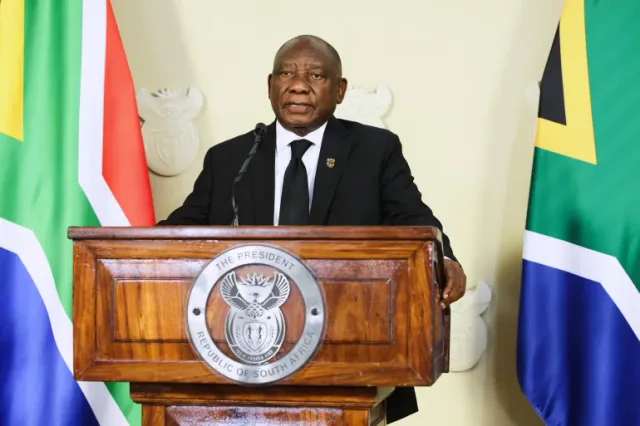
Speaking to reporters after voting at Hyde Park High School in Johannesburg, Ramaphosa said South Africa's exclusion from the US AGOA trade programme was "indeed a negative for us" and that Pretoria wanted to focus on a bilateral trade agreement, South Africa's IOL reported. Commenting on the US midterm results, he said: "I do think that this is going to introduce a new era in world relations," adding: "We are always willing to have good relations with the US."
The vote comes as voters contend with crumbling infrastructure, dry taps, persistent inequality and unemployment above 30 percent. "I want things to change... people must get work," said Thembinkosi Somana, 50, who was first in line at a polling station in Langa, Cape Town's oldest township. In Johannesburg, Andrea Smith, 41, said: "We shouldn't be having to worry about electricity and water. It's been going on for years."
More than 29 million voters are registered, but turnout at the last municipal elections in 2021 was just 46 percent. The African National Congress, the party of Nelson Mandela, is still projected to emerge as the largest party nationally, but polls point to a further erosion of support after it fell below 50 percent for the first time in the 2021 municipal vote and to just over 40 percent in the 2024 national election, forcing it into a government of national unity with nine other parties.
The Democratic Alliance, the second-largest party, has set its sights on Johannesburg, which has had five mayors in four years and is run by a fragile ANC-led coalition, while former president Jacob Zuma's uMkhonto weSizwe (MK) party is mounting a strong challenge for the port city of Durban. Final results are expected on Sunday and could trigger another round of coalition bargaining in several big cities; by February 2026, 74 of the country's 257 municipalities were already run by coalitions or minority administrations, according to the Mapungubwe Institute for Strategic Reflection.