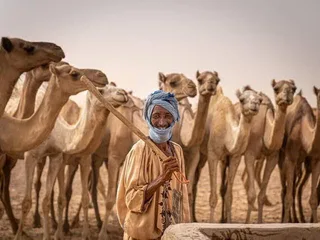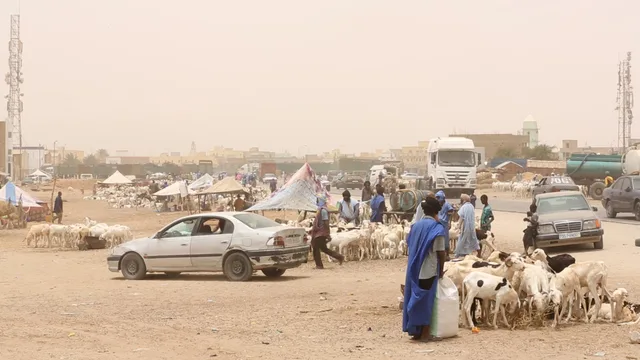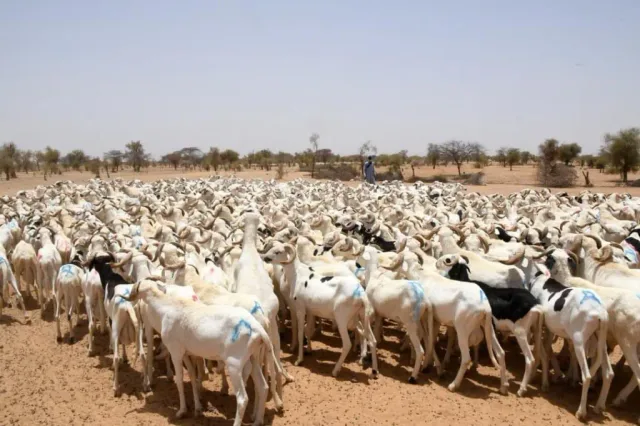
Madar (Dakar) - Twelve West African countries, including Mauritania, took part on Tuesday 24 November 2026 in Dakar in a high-level regional meeting on the 2026-2027 pastoral and agropastoral situation and cross-border cooperation in the western basin, according to the Senegalese Press Agency (APS).
The meeting, which runs until 26 November, brings together delegations from Benin, Burkina Faso, Côte d'Ivoire, The Gambia, Ghana, Guinea, Mali, Mauritania, Niger, Senegal, Chad and Togo, with the participation of CILSS, ECOWAS, UEMOA, the Alliance of Sahel States and herders' organisations.
The executive secretary of the Permanent Interstate Committee for Drought Control in the Sahel (CILSS), Abdoulaye Mohamadou, described a season "marked by insufficient and poorly distributed rainfall", with a fodder deficit of "25 to 90% in several pastoral areas", ponds drying up early and river levels falling.
He said CILSS had alerted states as early as September and that assessments carried out since then show "no improvement". Rejecting the idea of a "one-off accident", he described it as a "symptom of the structural weakening of pastoral systems" driven by land pressure, agricultural expansion, the occupation of livestock corridors, insecurity and climate change. "When livestock is blocked, a whole economic chain slows down," he warned.
According to CILSS officials, the western basin, between Mali, Mauritania and Senegal and linked to Guinea and The Gambia, is particularly affected: a 2026 study by the Billital Maroobe Network (RBM), led by CILSS, puts the livestock concerned at nearly 2.9 million head and the number of herders and their companions affected at around 40,000.
RBM president Boureima Dodo pointed to rising input prices, ponds drying up early and herds concentrated around wells before the end of the rainy season. Families are selling heifers and dairy cows to buy essential goods, "at the risk of compromising the rebuilding of their herds", he said, calling for rapid responses on water, livestock feed and veterinary care.
The World Bank director for Cabo Verde, The Gambia, Guinea-Bissau, Mauritania and Senegal, Djibrilla Issa, said pastoralism "knows no borders" and that the response "must be collective and regional".
Senegal's livestock minister, Ousmane Diagne, said livestock accounts on average for 36% of agricultural GDP in Sahel countries and 15% in coastal countries, and that the regional herd exceeded 623 million head in 2024. He called for easier cross-border mobility, the development of fodder crops, quality livestock feed at an affordable cost and stronger early warning systems.
The programme includes a technical meeting on 24 and 25 November, a consultation with technical and financial partners on 25 November and a ministerial conference on 26 November, where ministers will examine a draft political commitment, possibly in the form of a "Dakar Call", and a roadmap with a follow-up mechanism.