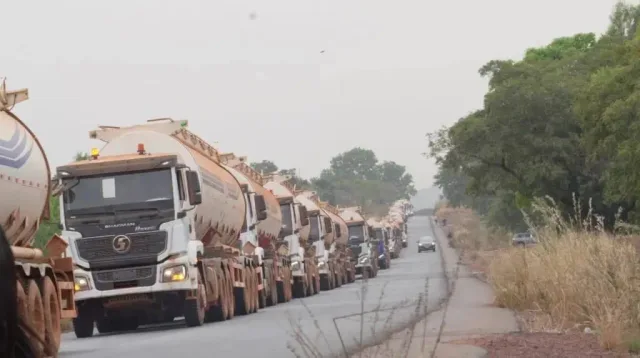
Madar (Niamey) - Niger's government plans to subject fuel tanker trucks to full technical inspections by state-approved bodies and gradually fit them with GPS tracking devices, after a meeting that stressed the need for a "profound transformation" of fuel transport, according to the state daily Le Sahel.
The plans were set out at a meeting in Niamey on Monday, 9 November 2026, between the petroleum and transport ministers and officials of the Federation of Hydrocarbon and Gas Transporters of Niger (FETHYGAN) and the Niger Petroleum Products Company (SONIDEP), on the role of national hauliers in the country's fuel supply and distribution chain, the paper said.
Transport and Civil Aviation Minister Colonel-Major Abdourahamane Amadou said tankers would be inspected to check that they are fit to carry hazardous products, and that gradually renewing the fleet was a priority. Niger has about 35,000 registered trucks, but the challenge now is to have a fleet suited to the specific requirements of fuel and gas transport, he said.
The planned measures also include stricter requirements for driving licences and medical fitness, specific training on preventing accidents, fires, explosions and pollution, systematic checks of the documents required by transit and destination countries, and up-to-date administrative files for transport companies, according to the same source.
The minister said the GPS devices would make it possible to follow tanker movements, check authorised routes and identify abnormal stops.
Petroleum Minister Hamadou Tini called for a "responsible, transparent and lasting" framework of cooperation across the supply chain, saying the participation of national hauliers "cannot be limited to mobilising vehicles" and requires "real operational capacity, compliant equipment, qualified drivers and reliable organisation".
According to the paper, transport operations will now come under a stricter contractual framework with SONIDEP, based on clearly established contracts, advance orders and a precise definition of each party's responsibilities.