Madar (Nouakchott) - Mauritania has closed the chapter of the Commission for Financial Transparency in Public Life, 19 years after it was created: the minutes transferring its files and duties to the National Anti-Corruption Authority were signed on Tuesday evening, 10 November 2026, at the Supreme Court in Nouakchott. The Authority is now responsible for receiving and recording the asset declarations of those required to file them, including authorising officers and managers of public resources, according to the Mauritanian News Agency (AMI), which announced it on Thursday 12 November.
The ceremony was supervised by the President of the Supreme Court, who previously chaired the Financial Transparency Commission, and the President of the National Anti-Corruption Authority. The minutes were signed by the commission's rapporteur and the Authority's secretary-general, in the presence of the Supreme Court's secretary-general and members of the commission's staff.
According to AMI, the move follows the end of the mandate of the commission, created by Law No. 054/2007 of 18 September 2007, and the transfer of its powers to the Authority, created by Law No. 023/2025 of 25 June 2025.
From a commission to an authority: what changes
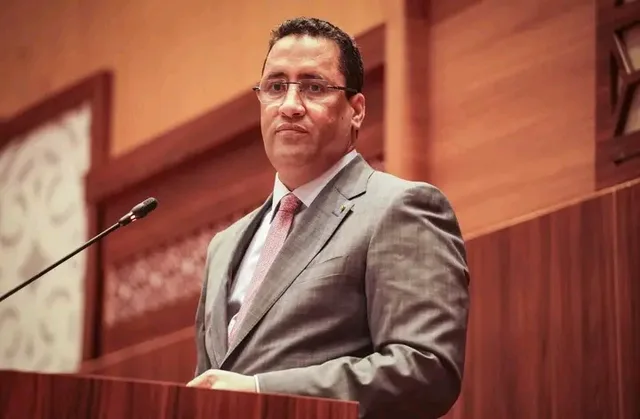
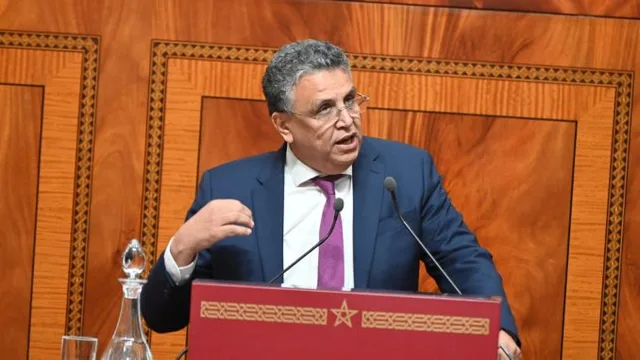
The then justice minister told MPs on 24 May 2025, when the law on declarations of assets and interests was passed, that the new text addressed gaps that had emerged over 18 years of applying the 2007 financial transparency law and responded to observations from the review of Mauritania's implementation of the UN Convention against Corruption, according to AMI.
According to the minister's presentation, the law extends the declaration requirement to new categories of public officials, obliges those concerned to declare their interests as well as their assets and those of their minor children, sets up a mechanism to prevent conflicts of interest, provides for prison sentences and fines for violators, and for the publication and updating of the declarations of certain senior officials such as the President, the Prime Minister and members of the government.
The same day, the National Assembly passed the law creating the National Anti-Corruption Authority, which the government presented as the fulfilment of an electoral pledge by President Mohamed Ould Cheikh El Ghazouani. The law gives the Authority powers that include receiving declarations of assets and interests, detecting illicit enrichment, receiving reports of corruption, protecting witnesses and whistleblowers, and publishing annual reports on its work.
An authority built in stages
The Authority's president was sworn in before the President of the Republic on 6 October 2025. Six members of its council were then appointed by a decree of 24 April 2026 and sworn in before the head of state on 18 May 2026, according to AMI.
On 27 October, the members of the Authority's executive body were sworn in before the President of the Supreme Court: five directors, including a director for declarations of assets and interests and investigations, the department directly concerned by the files received this week.
Asset declarations at the heart of the debate
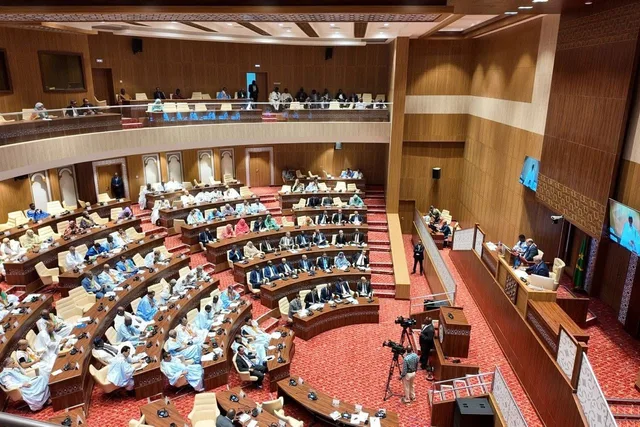
The transfer comes days after the National Assembly debated the government's general policy statement. Replying to MPs, Prime Minister Mokhtar Ould Djay said the government had passed laws, granted independence to the institutions concerned and asked officials to declare their assets, noting that only 25 MPs had declared their assets.
Ould Djay described corruption as the country's gravest challenge, while saying progress had been made in fighting it, and argued that some campaigns on the issue were driven by parties hurt by anti-corruption measures, before his government won the confidence of 145 MPs.
Earlier, the cabinet approved on 4 November the decree implementing the public procurement code, which requires those involved in public contracts to declare their assets and interests to limit corruption risks. Mauritania is also preparing a beneficial ownership disclosure system for companies with German support, after a 2024 assessment by the Extractive Industries Transparency Initiative found that 66% of the companies in the mining licence register it examined had not disclosed their beneficial owners.
The opposition: implementation is what counts
In the opposition, MP Biram Dah Abeid announced on 9 November his resignation from parliament to devote himself to what he called "the fight against corruption and disinformation", saying people convicted of corruption alongside former president Mohamed Ould Abdel Aziz had been "recycled". At a seminar organised by the Tewassoul party at the end of October, the party's vice-president said corruption was one of the main causes of declining public services.
When the two laws were debated in May 2025, some MPs feared, according to AMI, that the Authority would become "a mere archive of declarations", unable to do its job because of the large number of people required to declare, while others noted that the list was incomplete because MPs were not on it, even though the definition of a public official in the bill's first article included them. MPs also warned of overlapping powers among the bodies tasked with fighting corruption.
The AMI report did not give the number of files transferred to the Authority, nor a date for publishing the senior officials' declarations provided for in the new law.