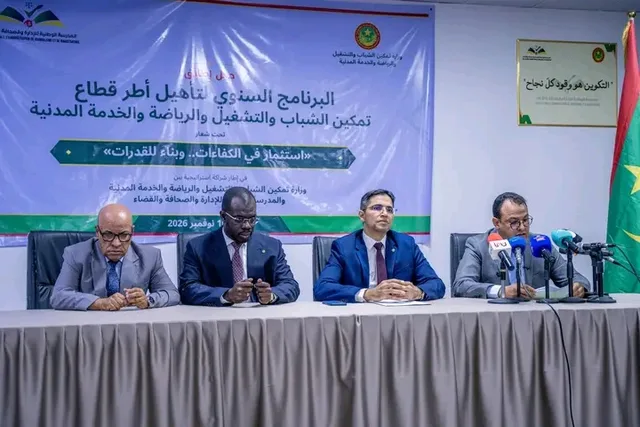
Madar (Nouakchott) - A regional workshop to present and discuss the 2025 report of the Extractive Industries Transparency Initiative (EITI) opened on Monday, 16 November 2026, in Nema, capital of the Hodh Ech Chargui region. Organised by the Initiative's national committee, it aims to share the report's findings and recommendations with local stakeholders, according to the Mauritanian News Agency (AMI).
The governor (wali) of Hodh Ech Chargui presented the figures in the report's summary: the extractive sector contributed about 19.77% of gross domestic product and 69.50% of total exports, while its revenue reached about 26.95 billion new ouguiyas, close to a quarter of state budget revenue, according to the same source.
The governor said the workshop was part of the guidelines set by President Mohamed Ould Cheikh El Ghazouani to consolidate the rule of law and institutions, strengthen transparency and fight corruption, which he said Prime Minister Mokhtar Ould Djay's government is implementing through governance-improvement programmes.
He also welcomed Mauritania's re-election to the board of the global Initiative on the sidelines of the recent Brussels conference, and praised the support of technical and financial partners, first among them German cooperation.
The Prime Minister's adviser who chairs the national EITI committee presented the methodology of the 2025 report. He said it went beyond a traditional financial audit to include assessing data quality, governance risks, the economic, social and environmental impacts of extractive activities, as well as contract transparency and the participation of national talent.
According to AMI, he stressed the committee's commitment to decentralising the debate and bringing information closer to citizens in the interior of the country to strengthen public oversight.
The representative of German cooperation said the regular publication of the reports and the widening of their scope reflect Mauritania's commitment to international transparency standards, and renewed Germany's commitment to keep supporting the committee technically and financially.
The opening was attended by the president of the regional council, the prefect (hakem) of Nema, the deputy mayor, members of the national committee and civil-society representatives from the two Hodh regions.