Madar (Nouakchott) - Mauritania’s economy is "dominated by some twenty large families" and its five largest borrowers alone account for a third of outstanding bank credit, according to a study published on Wednesday, 25 November 2026 by the French Development Agency (AFD).
The study, written by researcher Clémence Goullet for the "Macroeconomics and Development" series (No. 82), says the banking sector has 17 banks, a high number for the size of the economy, and is "both highly fragmented and highly concentrated": the three largest banks hold 47% of assets, while the other 14 share the rest of the market.
According to the paper, this structure reflects a "patrimonial logic" specific to the Mauritanian economy, as most small banks were set up by these families to finance their own businesses. Lending remains concentrated in sectors seen as less risky, such as fishing, construction, transport and services, while the extractive industry, which accounts for 19% of GDP, receives only marginal bank financing.
The non-performing loan ratio, close to 27% in 2019, fell to 19.2% in mid-2025, still high by international standards. The study notes that part of this improvement stems from accounting clean-up operations, such as reclassifications and write-offs, rather than better credit quality. Four non-systemic banks have also been placed under recovery for failing to meet target solvency ratios.
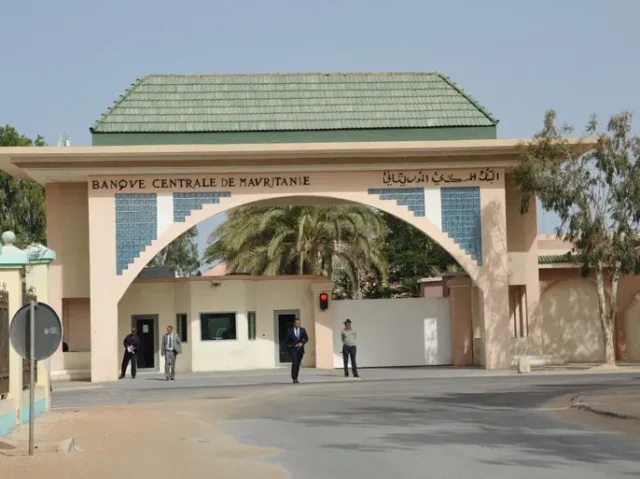
The AFD notes that the Central Bank of Mauritania has been gradually converging towards Basel III standards since 2020, with the whole sector due to be covered by the end of 2026, and describes tighter prudential requirements as "a central lever of consolidation".
On public finances, the deficit narrowed from 3.1% of GDP in 2022 to 0.3% in 2025, and public debt stood at 39.2% of GDP in 2025, down from 52.4% in 2021. Since the 2023 restructuring with Kuwait and Saudi Arabia, the IMF has lowered Mauritania’s risk of debt distress from "high" to "moderate". The study nonetheless highlights weak labour demand: only 42% of adults are economically active, 27% of women against 58% of men.