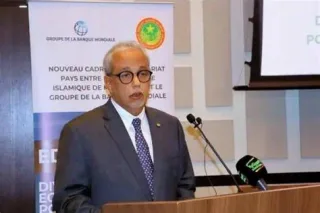
Madar (Nouakchott) - The Central Bank of Mauritania (BCM) held a ceremony in Nouakchott on Friday evening, 27 November 2026, to launch the Arabic edition of the book "History of Money in Mauritania: the Central Bank of Mauritania and Monetary Independence" (French title: "Histoire de la monnaie en Mauritanie"), in the presence of Governor Mohamed Lemine Ould Dhehby, according to the Mauritanian News Agency (AMI).
The book was co-written by Professor Abdel Wedoud Ould Cheikh and Dr Mohamed Vall Ould Bah. It was translated into Arabic by Dr Abdessalam Yahya and revised by Dr Mohamed El Mokhtar Ould Saad.
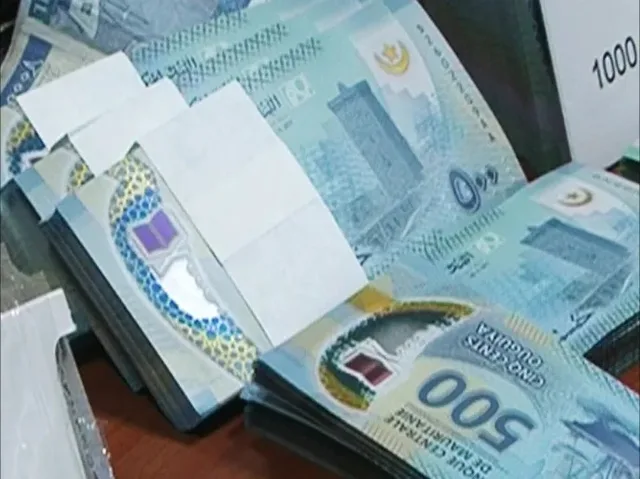
It traces the development of monetary exchange and means of payment, the process that led to the creation of the ouguiya as the national currency in 1973, the central bank's role in building monetary independence, and the institution's place in economic and financial life.
The book runs to more than 500 pages in three parts and twenty chapters, combining monetary, economic and institutional history, with more than sixty illustrations, maps and photographs, as well as charts, documentary boxes and archival sources, the agency said.
It is the first publication the central bank has devoted to the history of the national currency, aiming to document part of the country's monetary and institutional memory and to provide a reference for readers and researchers. The launch coincides with the Independence Day celebrations.
Speaking at the event, the governor reviewed the development of exchange rate regimes since 1971. He said the value of a currency depends on economic fundamentals and that the ouguiya's rate is set on the basis of a basket of currencies including the dollar, the euro, the Chinese yuan, the pound sterling and the Japanese yen, under the exchange rate regime in force since 2022, with a fluctuation band of plus or minus 5% around a central rate.
He added that people tend to stay attached to old units when a currency changes, as with the old French franc, and that digital currencies are still at an experimental stage, citing China's trial, which reached about 200 million consumers, and a European Central Bank project.
The authors and the translator presented the book's content and answered questions from the audience on the evolution of exchange systems, from barter, goods and precious metals to paper and digital money. Researchers, academics and people interested in economic, banking and monetary affairs attended the ceremony.